
Best Alternative Wedding Dress Designers 2026
Table of Contents
- What Makes a Wedding Dress Alternative in 2026
- Unique Wedding Dress Trends 2026: Silhouettes, Fabrics, and Details
- How to Choose an Alternative Wedding Dress: A Practical Guide
- Sustainable Bridal Brands 2026: Ethical Production and Circular Fashion
- How to Style an Alternative Wedding Dress for Your Ceremony
- Budget-Friendly Alternative Bridal: What to Expect and Where to Save
- Frequently Asked Questions
Last Updated: September 17, 2026
What Makes a Wedding Dress Alternative in 2026
An alternative wedding dress is any bridal gown that steps outside the traditional white ballgown formula, favoring unexpected silhouettes, non-white color palettes, or unconventional fabrics. In 2026, that definition has widened to include everything from bridal separates to vintage-inspired lace gowns with dramatic backless cuts. This guide breaks down what separates alternative wedding dress options and how to choose the right one for your ceremony.

Unique Wedding Dress Trends 2026: Silhouettes, Fabrics, and Details
Non-Traditional Silhouettes and Statement Pieces
The mermaid and trumpet cut remains a dominant non-traditional silhouette, flattering curves while still delivering dramatic flair. This silhouette is often paired with unexpected necklines, off-shoulder sweetheart cuts, plunging V-necks, and open backs that turn a gown into a genuine statement piece.
Fabric Innovation and Textural Details
Fabric is where alternative bridal design earns its keep. Organic cotton, crochet lace, embroidered organza, and tulle are popular base fabrics. The goal is textural details you can see and feel: hand-placed lace appliques, delicate beadwork, and sheer panels that catch light differently as you move.
How to Choose an Alternative Wedding Dress: A Practical Guide
Choosing an alternative wedding dress comes down to three decisions: silhouette, fabrication, and fit method. Get those right and the rest, color palette, embellishment, accessories, tends to fall into place.
Size-Inclusive and Custom-Made Options
Size-inclusive alternative bridal is a growing expectation. Many made-to-order options offer custom sizing, letting you submit your exact bust, waist, hip, and hollow-to-floor measurements rather than guessing at a letter size. Plus-size ranges frequently extend well past standard retail sizing, with dedicated size charts for fuller figures.
| Fit Method | Best For | Return Flexibility | Lead Time |
|---|---|---|---|
| Off-the-rack | Fast timelines, standard sizing | Standard returns | In stock |
| Made-to-order | Custom measurements, plus sizes | Limited, custom terms | Weeks |
| Bespoke | Full design control | Non-returnable | Longest |
Virtual Try-On and Remote Fitting
Virtual try-on and remote fitting have become tools for brides shopping outside a major city. Some services walk customers through self-measurement over video, and some offer digital try-on so you can see a silhouette against your proportions before ordering. It is not a perfect substitute for standing in a fitting room, but it can help close the gap for remote buyers.
Sustainable Bridal Brands 2026: Ethical Production and Circular Fashion
Sustainable bridal in 2026 is less a label than a set of verifiable production choices. Brands committed to sustainable bridal can often answer three questions clearly: where the gown is made, whether it is cut to order or mass-produced, and what happens to it after the wedding. Everything else, the marketing language, the recycled hangtags, is secondary.
What Actually Counts as Ethical Production
A few concrete markers can help distinguish sustainable bridal practices:
- Cut-to-order or made-to-order production. Gowns are cut only after an order is placed, which eliminates the deadstock and overproduction that define fast fashion.
- Fiber sourcing. Natural and lower-impact fibers, organic cotton, and vintage lace, can carry a smaller footprint than virgin polyester satin. Note that "satin" and "silk" are not interchangeable; polyester satin is petroleum-based, while silk is a protein fiber.
- Third-party certification. Look for recognizable standards rather than brand-invented badges. Common ones in apparel include GOTS (Global Organic Textile Standard) for organic fiber content and OEKO-TEX Standard 100 for testing against harmful substances. A brand that names a specific certification can be more credible than one that says "ethically made" with no backing.
- Small-batch and local manufacturing. Domestic or regional ateliers can reduce shipping emissions and make it easier to verify working conditions, though "local" alone is not a guarantee, so pair it with the questions above.
The Circular Economy: Resale, Rental, and Redesign
A wedding gown is typically worn once. Circular options are now mainstream enough to plan around:
- Resale. Pre-loved gowns move through dedicated marketplaces and general resale platforms. Brides can often find a designer alternative gown at a fraction of retail, and sellers recoup part of their cost. The trade-off is sizing, most resale gowns are a fixed size, so budget for alterations.
- Rental. Rental works best for brides who want a specific look for one event and have no interest in keeping the gown. Availability is the constraint; popular silhouettes book out months ahead.
- Redesign and rewear. Some designers and tailors will restructure a mother's or grandmother's gown into a modern alternative silhouette, reusing the lace, beading, or fabric while rebuilding the cut. This is the most labor-intensive route but produces a genuinely one-of-a-kind piece.
- After the wedding. Dyeing, hemming, or restructuring a gown into a reception or anniversary dress extends its life. A gown cut to a shorter length and re-dyed is a common second-life move.
Questions to Ask Before You Buy
If a brand cannot answer these clearly, consider the sustainability claim unverified:
- Is this gown cut to order, or is it mass-manufactured?
- Which fibers are in the shell, lining, and interlining? (The lining is often the least sustainable part and the easiest to overlook.)
- Is the production facility certified by a recognized standard, and which one?
- Can the gown be repaired, resold, or redesigned later?
- What is the return policy if the fit is wrong?
Global Organic Textile Standard (GOTS) certification overview
OEKO-TEX Standard 100 explained
How to Style an Alternative Wedding Dress for Your Ceremony
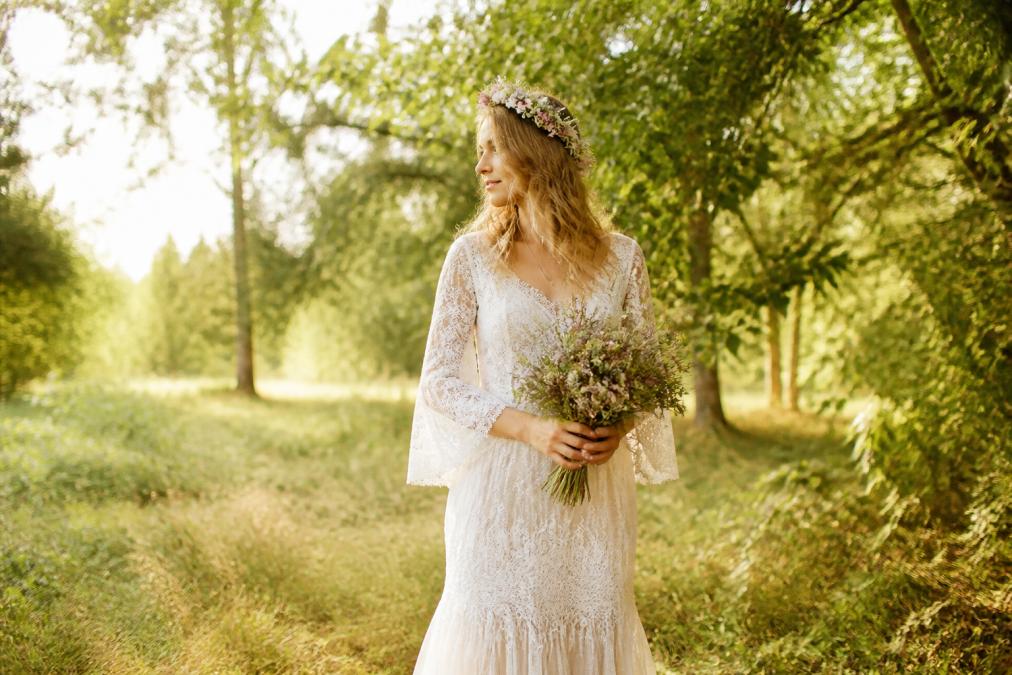
- Match metal tone to your gown's embellishment, not your everyday jewelry
- Choose a veil that echoes the gown's fabric rather than contrasts with it
- Add one statement piece, not three
- Keep shoes comfortable enough to actually wear through the ceremony
- Let the color palette guide flowers and decor
Budget-Friendly Alternative Bridal: What to Expect and Where to Save
Budget-friendly alternative bridal is about controlling the total cost of getting a gown that fits and that you can actually wear. The gown is rarely the only line item, and savings can come from how you buy.
The Real Cost Stack
Most brides budget for the dress and forget everything attached to it. A complete accounting includes:
- The gown itself, the largest line, and the one most affected by whether you go off-the-rack, made-to-order, or bespoke.
- Alterations, the most underestimated cost. Hemming, taking in the bodice, and adjusting straps on a structured or lace gown can run a meaningful fraction of the gown's price, and delicate fabrics like lace and organza are slower (and therefore pricier) to alter than a simple crepe.
- Undergarments and support, a gown with built-in cups and boning can eliminate the need for specialty shapewear, which is a real saving.
- Veil and accessories, often the easiest place to cut, since these are frequently borrowed, bought secondhand, or skipped entirely.
- Cleaning and steaming, a pre-wedding press and a post-wedding clean are both real costs, especially for beaded or lace gowns.
- Shipping and rush fees, made-to-order and bespoke timelines can carry expedite charges if your date is close.
Where to Save Without Regretting It
- Choose made-to-order over bespoke. You still get custom measurements, but you skip the design and pattern-drafting fees that bespoke carries.
- Order to your measurements. The single biggest saving is avoiding alterations by getting the size right the first time. Measure first, order second.
- Shop resale or sample sales. Pre-loved and sample gowns are the deepest discount channel in bridal, though sizing is fixed and selection is unpredictable.
- Skip or borrow the veil. Veils are worn for minutes and are widely available secondhand.
- Pick a gown with built-in support. Fewer undergarment purchases, fewer alteration visits.
- Plan your timeline. Rush fees are avoidable if you start early enough, made-to-order and bespoke both need lead time.
Where Not to Cut Corners
Fit, fabric quality, and return terms are important considerations. A gown that needs heavy alterations can sometimes cost more in the end than a well-fitting made-to-order piece. A low-grade lining can fail at the seams under the weight of beading. And a gown with no return path leaves you with no recourse if the fit is wrong.
Frequently Asked Questions
What are the trendiest wedding dresses for 2026?
For 2026, expect to see non-traditional silhouettes like fit-and-flare gowns with dramatic flair. Textural details such as hand-crafted lace, embellishment, and fabric innovation are key. Color palettes are moving beyond ivory. Sustainable and ethical production methods are also a growing trend, with more brands offering made-to-order and vintage-inspired pieces.
Who are some alternative bridal designers for non-traditional weddings?
Alternative bridal options often focus on unique aesthetics rather than traditional ball gowns. Look for styles that lean into bohemian aesthetics. Many options offer made-to-order or bespoke services, allowing for custom sizing and design modifications. When researching, check for brands that prioritize sustainable materials like organic cotton and ethical production. Always review sizing charts and return policies, especially for custom items.
How do I find a unique wedding dress that fits my personal style?
Start by defining your bridal aesthetic: are you drawn to bohemian romanticism or elevated elegance? Look for options that offer customization, such as custom sizing or design alterations. Consider the venue and season, then choose fabrics and silhouettes that match. Don't be afraid to mix elements, like a vintage-inspired lace with a modern cut. Remote fitting services can help you visualize the dress before committing.
Are sustainable wedding dresses becoming more popular in 2026?
Yes, sustainability is a growing priority for brides in 2026. Many are seeking dresses made from organic cotton or vintage materials. Ethical production, fair labor practices, and reduced waste are key concerns. Brands are responding with made-to-order models that avoid overproduction, and resale platforms for bridal wear are gaining traction. When shopping, ask about fabric sourcing and manufacturing processes to ensure your dress aligns with your values.
What defines an alternative wedding dress designer?
An alternative wedding dress can diverge from traditional bridal norms. These often focus on non-traditional silhouettes, unique fabrics, and unconventional details like open backs. Their designs may be inspired by vintage or bohemian aesthetics. Many options work on a made-to-order or bespoke basis, offering customization for fit and style. They prioritize individuality over convention, helping brides express their personal style.
Choosing an alternative wedding dress means trusting your own taste over a template, and that takes confidence. At JazzySuSu, we curate vintage-inspired bridal pieces built for exactly that: made-to-order gowns with custom sizing, handpicked details, and the kind of construction that holds up beyond one wear. With free shipping on orders over $100 and pieces designed to be worn again, building your signature bridal look starts here. Shop now and find the gown that actually feels like you.