
How to Distinguish Unique Artisan Decor: 2026 Guide
Table of Contents
- What Authentic Artisan Decor Actually Looks Like
- Signs of Handmade Quality to Inspect Before You Buy
- How to Spot Mass-Produced Decor Disguised as Handmade
- Your Artisan Decor Authentication Checklist
- Price vs. Value: What You're Actually Paying For
- Benefits of Artisan Home Decor Beyond the Aesthetic
- Care and Maintenance for Handcrafted Pieces
- Conclusion
Last Updated: August 13, 2026
What Authentic Artisan Decor Actually Looks Like
Artisan decor is handcrafted goods made by skilled makers whose individual touch leaves a visible, physical record on every piece. At JazzySuSu, we've spent years curating handpicked home decor for free-spirited spaces, and the single most common question we hear is: "How do I know this is actually handmade?" The answer lives in the object itself.
Tool Marks, Asymmetry, and Glaze Variations
The biggest mistake most buyers make is assuming imperfection means defect. On genuinely handcrafted pieces, imperfection is the signature.
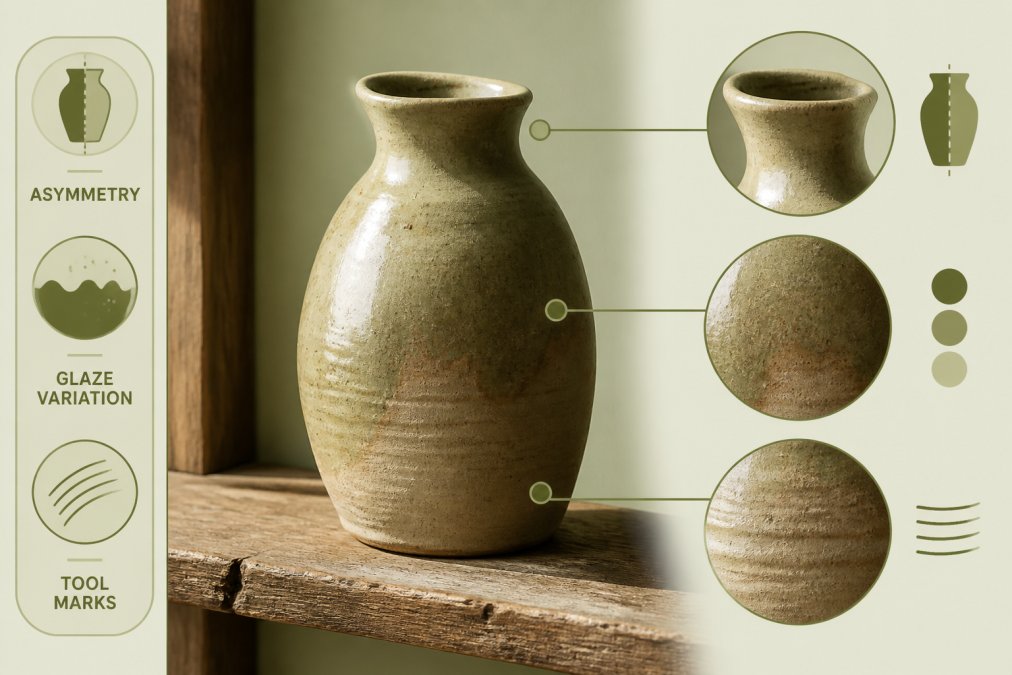
Look for tool marks left by chisels, ribs, or throwing wires. On hand-thrown ceramics, you'll see faint spiral ridges where the potter's fingers shaped the clay. Hand-carved wooden pieces carry directional grooves that follow the grain. These marks are the record of a person making decisions in real time.
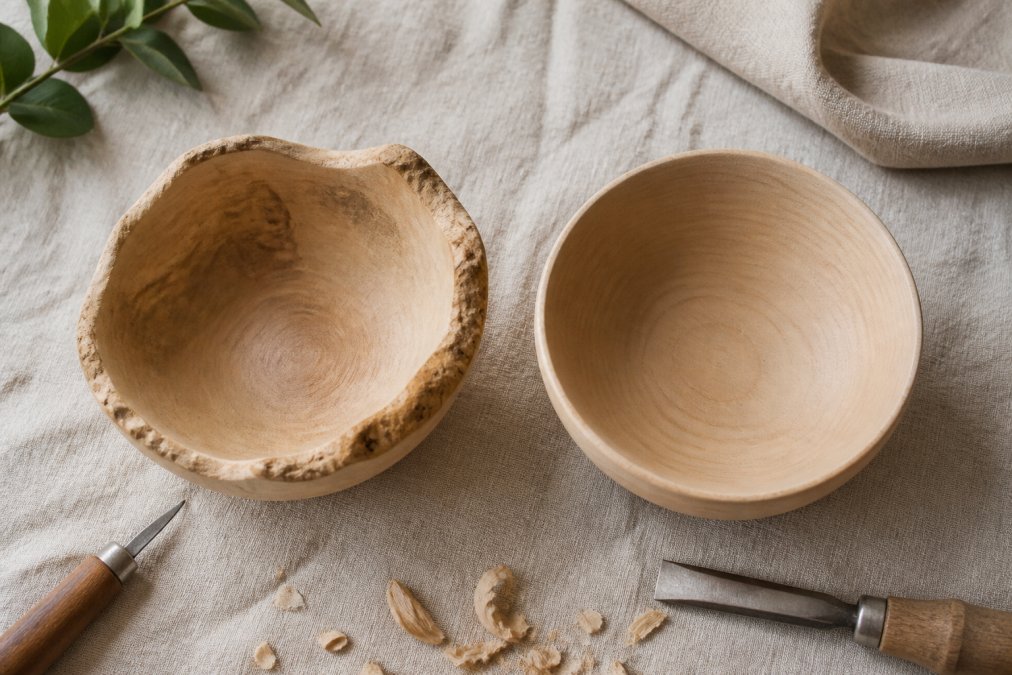
Asymmetry is another reliable indicator. A hand-thrown bowl will not measure identically from rim to rim. The lip may sit slightly higher on one side. Mass-produced items eliminate this variation entirely, which is exactly why its presence signals authenticity.
Glaze variations on ceramics are perhaps the most beautiful tell. Because handmade glazes interact unpredictably with heat, you get color shifts, pooling, and surface texture that cannot be replicated by machine. Two pieces fired on the same day will look different.
Natural Texture and Material Provenance
Authentic artisan decor typically uses natural materials with traceable provenance: locally sourced clay, reclaimed wood, hand-spun fibers, or stone from a specific region. These materials carry their own visual character. Wood grain is never perfectly uniform. Stone has veining and mineral inclusions. Handwoven textiles show slight tension variations across the weft.
Run your hand across the surface. Natural texture has depth and variation. Machine-finished surfaces, even when textured by design, feel uniform because the irregularity is itself manufactured to a spec.
Material provenance also matters from an ethical sourcing standpoint. As noted by the Smithsonian Center for Folklife and Cultural Heritage, traditional craft techniques are often tied to specific geographic communities and raw material sources. A piece made from locally harvested materials by a maker in that community carries authentic provenance.
Signs of Handmade Quality to Inspect Before You Buy
Physical inspection is where real evaluation happens, not in photographs.
Weight, Finish, and Construction Details
Pick the piece up. Handcrafted items frequently feel heavier than mass-produced equivalents because they're made from denser, less processed materials. A hand-thrown ceramic vase will feel more substantial than a slip-cast factory version.
Examine the finish closely. On hand-finished pieces, paint may be slightly thicker at edges where a brush turned. A wax finish on wood may show subtle buffing marks. These are evidence of a human applying finish by hand.
Construction details reveal authenticity. On handwoven baskets, look at the joins and edges. Hand-stitched seams have slight variations in stitch length. Hand-tied knots in macramé are not perfectly identical. On wooden joinery, hand-cut dovetails have subtle angle variations that machine-cut joints do not.
| Inspection Point | Artisan-Made Signal | Mass-Produced Signal |
|---|---|---|
| Weight | Heavier, denser material | Lighter, uniform across units |
| Surface finish | Slight variation, hand-applied | Perfectly even, machine-applied |
| Seams and joins | Subtle irregularities | Machine-perfect consistency |
| Glaze or paint | Pooling, color shifts | Flat, uniform color |
| Base or underside | Rough, unfinished, or signed | Smooth, labeled, identical |
The Maker's Mark and Artisan Story
A genuine maker's mark is one of the most reliable authentication signals. Many artisans sign, stamp, or incise their initials or signature into the base or underside of their work. This is a centuries-old tradition of craft accountability.
Authentic makers can tell you where they trained, what materials they use, and why they make what they make. When shopping online, look for detailed maker profiles rather than vague "handcrafted by skilled artisans" copy. A real artisan has a name, a location, and a specific process.
According to the American Craft Council, the relationship between maker and buyer defines the craft tradition. When that story is absent or generic, treat it as a yellow flag.
How to Spot Mass-Produced Decor Disguised as Handmade
The market for faux-artisan products has grown significantly because "handmade aesthetic" sells. Factories now produce items specifically designed to look handcrafted.
Red Flags of Faux-Artisan Products
The clearest red flag is perfect consistency across multiple units. If you can find five identical versions of the same piece with identical glaze patterns, dimensions, and "imperfections" in the same locations, those imperfections were designed into a mold. Real handmade work produces one-of-a-kind results.
Watch for vague provenance language. Phrases like "inspired by handmade traditions," "artisan-style," or "handcrafted look" are aesthetic descriptions, not claims of handmade origin. A genuinely handmade piece states where it was made and by whom.
Pricing that seems too low for the claimed production method is another signal. Authentic craftsmanship takes time. When prices don't reflect that labor, ask why.
Additional red flags:
- Listings with no maker name, studio name, or geographic origin
- "Handmade" claims combined with stock photography showing no actual maker
- Identical items listed across dozens of unrelated shops
- Plastic or resin materials described with natural material terminology
- No variation between product photos of supposedly unique pieces
As documented in the Federal Trade Commission's guidelines on deceptive advertising, product descriptions that create false impressions about origin or production method can constitute deceptive trade practices.
Your Artisan Decor Authentication Checklist
Use this checklist before committing to any artisan decor purchase, whether in person or online.
Physical Inspection:
- Does the piece show tool marks, throwing lines, or hand-application evidence?
- Is there visible asymmetry that reads as intentional, not accidental?
- Do glaze, paint, or finish show natural variation rather than machine uniformity?
- Does the piece feel appropriately heavy for its material?
- Is the underside unfinished, signed, or stamped with a maker's mark?
Provenance Verification:
- Is the maker's name and location clearly stated?
- Does the seller provide a genuine artisan story with specific details?
- Can you find consistent work by this maker across a portfolio or profile?
- Does the price reflect the labor time required for handmade production?
Red Flag Check:
- Are all units in the listing identical, including supposed "imperfections"?
- Does the listing use vague language like "artisan-style" rather than "handmade by [name]"?
- Is the material described accurately, or are natural material terms applied to synthetics?
- Is the price significantly below what comparable handmade work typically costs?
Price vs. Value: What You're Actually Paying For
The price gap between authentic artisan decor and mass-produced alternatives reflects something specific. You're paying for labor time, material quality, skill development, and often cultural heritage.
A hand-thrown ceramic piece requires years of technique development. The clay may be sourced from a specific region. The firing process is managed by a person. Each factor adds justified cost.
What you get in return is a piece with design integrity that mass production cannot match. The visual character of a handmade object changes as light moves across it. Many buyers find that artisan pieces hold their value better over time, particularly those tied to recognized makers or cultural traditions.
Benefits of Artisan Home Decor Beyond the Aesthetic
The benefits of artisan home decor extend well past aesthetics.
Sustainable production is significant. Artisan-made goods typically involve shorter supply chains, less industrial processing, and smaller production runs. Many artisans work with natural, biodegradable, or reclaimed materials. The Environmental Protection Agency's guidance on sustainable consumption highlights the connection between purchasing decisions and material lifecycle outcomes. Buying one well-made artisan piece rather than three disposable alternatives reduces consumption and waste.
Cultural heritage is another dimension. Traditional craft techniques carry knowledge spanning generations. Hand-carved woodwork, hand-thrown ceramics, and hand-woven textiles are living traditions. Purchasing these objects supports the continuation of those skills and the communities that practice them.
Bespoke and custom options are also more accessible through artisan channels. Many makers will adapt dimensions, colorways, or materials to your specific space.
JazzySuSu's curated home decor collection is selected with these values in mind. Each piece is handpicked for its unique aesthetic and the story behind it.
Care and Maintenance for Handcrafted Pieces
Handcrafted pieces reward careful handling, and their maintenance differs from mass-produced equivalents.
Ceramics and pottery: Avoid sudden temperature changes, which can crack hand-thrown pieces. Clean with a soft cloth and mild soap rather than abrasive cleaners. For unglazed pieces, avoid prolonged water exposure.
Hand-carved wood: Natural oils protect hand-carved wood and preserve surface detail. Apply a food-safe oil or beeswax finish annually. Keep wood decor away from direct heat sources and sunlight, which can cause cracking and fading.
Handwoven textiles and macramé: Spot clean rather than machine wash where possible. Natural fibers can shrink or distort with aggressive washing. Store folded rather than compressed, and air them out periodically.
Metals and hand-finished surfaces: Tarnishing on hand-finished metals is natural and often desirable. A soft polishing cloth maintains the finish without stripping the patina that gives artisan metalwork its character.
Treat the piece as what it is: something made slowly, by hand, from real materials.
Choosing artisan decor is straightforward once you know what to look for. The authentication checklist above gives you a practical framework for every purchase decision. JazzySuSu's handpicked home decor collection is curated to take that guesswork out of the process: every piece is selected for genuine craft quality, unique aesthetic, and design integrity that holds up over time. Shop the collection and find pieces built to last, not just to photograph well.
Frequently Asked Questions
What are the key characteristics of authentic artisan decor?
Authentic artisan decor carries visible signs of the human touch: slight asymmetry, tool marks, glaze variations in ceramics, and subtle irregularities in shape or finish. Each piece is one-of-a-kind because it was made by hand rather than cast in a mold. You'll also often find a maker's mark, a signature, or documentation of the artisan's heritage and technique. These qualities are features of craftsmanship, not flaws.
How can you tell if a home decor item is handmade or factory-made?
Run your fingers across the surface. Handmade pieces have natural texture, minor inconsistencies, and weight that feels intentional. Machine-made items are perfectly uniform, lightweight for their size, and often have mold seams. Check the seller's product description for vague language like 'artisan-inspired' rather than 'artisan-made.' Genuine handcrafted decor will name the maker, the technique, and often the region where it was produced.
Why is artisan decor considered more sustainable than mass-produced items?
Handcrafted pieces are made in small batches using traditional techniques, which typically means lower energy consumption, less material waste, and ethical sourcing of raw materials. Slow-made production avoids the overstock cycles that drive landfill waste in mass manufacturing. Artisan-made decor also tends to last longer due to higher material quality and construction care, meaning you replace it less often, a direct benefit for eco-conscious shoppers.
What should I look for to ensure an item is truly unique?
Ask whether the item is custom-cast, hand-thrown, or hand-carved rather than produced from a standard mold. Look for natural variations in color, grain, or texture that confirm no two pieces are identical. A trustworthy seller will share the artisan's story, describe the technique used, and often show multiple photos of the same item from different angles to show its individual character. Limited production runs are another strong indicator of genuine uniqueness.
This article was written using GrandRanker