
Sustainable Capsule Wardrobe Guide: Build Yours
Table of Contents
- Start With a Closet Audit: Assess What You Own
- How to Declutter Your Closet Sustainably
- Define Your Personal Style and Color Palette
- The Capsule Wardrobe Checklist for Beginners
- Minimalist Wardrobe Essentials That Earn Their Spot
- How to Find Ethical Fashion Brands for Capsule Wardrobes
- Buy Less, Choose Well: Investment Pieces and Versatile Staples
- Care, Repair, and Seasonal Rotation for Longevity
- Frequently Asked Questions
Last Updated: September 7, 2026
A sustainable capsule wardrobe is a curated collection of versatile, high-quality clothing pieces designed to be mixed and matched, reducing excessive consumption. This guide from JazzySuSu walks you through the entire process, from the initial closet audit to long-term care.
Start With a Closet Audit: Assess What You Own
Before buying anything new, you need a full picture of your current wardrobe. A closet audit means emptying your closet and evaluating every item against your actual lifestyle, not the lifestyle you imagine having.
Pull everything out and sort it into three piles: keep, repair, and remove. As you sort, ask when you last wore each piece and whether it fits your body and current daily activities.
This audit also surfaces the gaps, like owning five casual dresses but only one pair of work trousers, preventing impulse purchases later because you will shop with a specific list in mind.
How to Declutter Your Closet Sustainably
Once you have identified the remove pile, resist the urge to toss everything in a trash bag. Sustainable decluttering means keeping textiles out of landfills, where the Environmental Protection Agency's guide on textile waste notes that textiles make up a significant portion of municipal solid waste.
Work through your remove pile in this order:
- Sell high-value or designer pieces through consignment shops or resale apps.
- Donate gently worn items to local charities or shelters, calling ahead to confirm what they accept.
- Repurpose stained or damaged fabrics as cleaning rags or craft materials.
- Recycle truly unwearable textiles through brand take-back programs or municipal drop-off points.
The goal is to ensure every piece finds a second life, bridging decluttering and the broader principles of sustainable fashion.
Define Your Personal Style and Color Palette
A capsule wardrobe only works if you love every piece in it, so define your personal style before shopping. Look at what you kept in your audit and identify the common threads: the silhouettes, fabrics, and colors you gravitate toward.
From there, build a cohesive color palette. A capsule system typically relies on neutral base colors like black, white, navy, or beige, paired with one or two accent colors that complement your skin tone, making mix-and-match outfits effortless.
Your palette acts as a filter, letting you instantly reject anything outside it and curb the impulse buys that derail a minimalist wardrobe.
The Capsule Wardrobe Checklist for Beginners
A sustainable capsule wardrobe checklist for beginners should focus on versatility and coverage, not a specific number. While some minimalism advocates suggest 30 to 40 items total, the right size depends on your climate, profession, and hobbies.
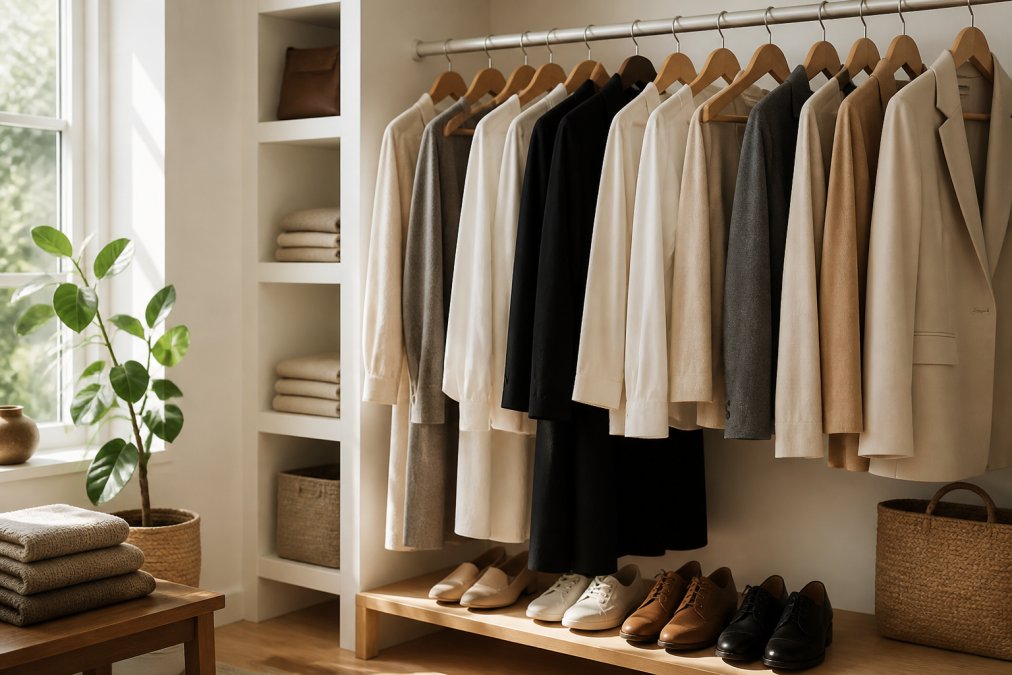
Start with this core checklist to cover your weekly rotation:
- 2 pairs of well-fitting jeans or trousers
- 3 to 4 versatile tops (plain tees, button-downs, blouses)
- 2 layering pieces (cardigan, blazer, or jacket)
- 2 dresses or jumpsuits suitable for multiple occasions
- 1 outerwear piece appropriate for your climate
- 2 pairs of shoes (one casual, one dressy)
- Accessories that elevate basics, like scarves or simple jewelry
Each item should coordinate with at least three other pieces in your closet. If it only goes with one outfit, it does not earn a spot in your capsule system.
Minimalist Wardrobe Essentials That Earn Their Spot
The minimalist wardrobe essentials are the workhorses of your closet: pieces that transition from day to night, from casual to formal. But the biggest reason a capsule wardrobe fails is not the number of pieces, it is that the pieces do not fit the wearer's actual body. An uncomfortable garment, no matter how sustainable or well-made, will sit unworn.
The Fit-First Framework
Before evaluating a piece for versatility or cost-per-wear, evaluate it for fit. People often abandon their capsule because they feel 'frumpy' or 'uncomfortable' in their chosen essentials. The fix is to build your capsule around your body's actual proportions, not a generic model's measurements.
Use this three-point fit check on every potential essential:
- The shoulder seam test. For any structured top, jacket, or coat, the shoulder seam should sit exactly at the edge of your shoulder bone. If it falls off, the garment is too big; if it digs in, it is too small. This is the single most important fit indicator for tailoring.
- The movement test. Put the garment on and move the way you actually do in real life. Raise your arms overhead, bend over, sit down, and reach across your body. If the fabric pulls, binds, or gaps, it will not be comfortable for a full day of wear.
- The silhouette check. Look in a full-length mirror. Does the garment skim your body without clinging or bagging? For pants, the waistband should sit comfortably without gaping at the back, a common issue for curvier hip-to-waist ratios. For dresses and jumpsuits, the waist seam should hit your natural waist.
Body-Type-Specific Adjustments
Different body types require different cuts to achieve that 'fits like a glove' feeling. Here is how to adapt the classic capsule essentials to common body shapes:
- Pear shape (hips wider than shoulders). Look for tops with details at the shoulder, like puff sleeves, epaulets, or a boat neck, to balance your proportions. For bottoms, a straight-leg or wide-leg trouser will skim your hips without clinging. Avoid skinny jeans that pull at the thigh; a high-rise wide-leg cut is more forgiving and elongates the leg.
- Apple shape (weight carried in the midsection). Choose tops with a V-neck or scoop neck to draw the eye upward. Look for dresses and jumpsuits with an empire waist or a relaxed, draped silhouette that does not cinch tightly at the natural waist. A-line skirts and dresses are your friend; they skim over the midsection and create a balanced line.
- Rectangle shape (shoulders, waist, and hips are similar). You have the most flexibility. To create curves, look for pieces with peplum details, ruffles, or a belted waist. A wrap dress is a classic choice that adds definition. For pants, a high-waist wide-leg or a tapered cigarette pant both work well.
- Hourglass shape (bust and hips are similar, waist is smaller). Emphasize your waist with fitted silhouettes. Look for wrap tops, fit-and-flare dresses, and high-waisted pants that sit at your natural waist. Avoid boxy, shapeless cuts that hide your waist and make you look larger than you are.
The Cost-Per-Wear Metric, Refined
When evaluating an essential, calculate its cost per wear by dividing the price by the number of times you will realistically wear it. A $60 cardigan worn 60 times costs $1 per wear, a far better value than a $20 fast-fashion top worn twice. But this metric only works if the garment fits, a $200 pair of sustainable jeans that pinch your hips will cost you $200 for zero wears. Fit must come before price.
Keep a running list of your 'fit wins', the pieces you reach for most often because they feel great. Note the brand, cut, and fabric, and use this list as your shopping guide. When you find a brand that makes great-fitting trousers for your body type, you can buy that same cut in multiple colors.
At JazzySuSu, we curate pieces with this exact philosophy in mind. Our Spring/Summer Double Breasted Trench Mac Coat is a prime example: a fully lined, high-quality layer with a classic cut, designed to be worn repeatedly. The key is not just the fabric or construction, it is how the piece makes you feel when you put it on. If it does not pass the movement test and silhouette check, it does not earn a spot in your capsule.

How to Find Ethical Fashion Brands for Capsule Wardrobes
Seeking out ethical fashion brands for capsule wardrobes requires looking beyond marketing buzzwords. Sustainable fashion claims are often vague, so you need a vetting process that separates genuine commitment from greenwashing.
Start by examining a brand's transparency. Do they publish information about their supply chain, manufacturing locations, and material sourcing? Legitimate brands are usually eager to share these details. Next, look for third-party certifications that verify claims about organic materials or fair labor practices.
Finally, assess the durability of their products. A truly sustainable brand designs for garment longevity, using quality materials and construction that can withstand years of wear and repair. This is where the Federal Trade Commission's Green Guides on environmental marketing claims become relevant, as they outline how brands can honestly communicate their environmental attributes without misleading consumers.
Buy Less, Choose Well: Investment Pieces and Versatile Staples
The phrase "buy less, choose well" captures the essence of conscious consumerism. Instead of buying five mediocre items, save your budget for one investment piece you will wear for years, directly countering the disposable culture of fast fashion.
Versatile staples are the backbone of this strategy. A high-quality pair of wide-leg jeans can be dressed up with a blazer or down with a simple tee. The key is seeking out pieces with timeless silhouettes that do not scream a specific year, ensuring they remain stylish long after trends fade.
Our Stone Blue Star Patchwork Wide Leg Jeans at JazzySuSu exemplify this balance. The high-waist, wide-leg cut is a classic shape, while the unique patchwork details give it personality, ensuring it stands out from mass-produced denim while remaining versatile enough for daily wear.

Care, Repair, and Seasonal Rotation for Longevity
A sustainable capsule wardrobe does not end with the purchase; proper wardrobe maintenance delivers the environmental and financial benefits. The most sustainable garment is the one you already own, and keeping it in rotation requires a commitment to care and repair.
The Care Label Is Your First Line of Defense
Before you wash anything, read the care label. It is not a suggestion; it is a set of instructions based on how the fabric was constructed and dyed. Ignoring these labels and defaulting to a warm wash and hot dryer is the fastest way to shrink natural fibers and break down elastic in synthetics.
Adopt these default settings to protect your investment pieces:
- Wash in cold water (below 60°F). Cold water prevents color bleeding, reduces shrinkage, and is gentler on fibers. It also saves energy, since heating water accounts for the majority of a washing machine's electricity use.
- Use a gentle, pH-neutral detergent. Harsh detergents strip natural oils from wool and silk. Look for detergents specifically formulated for delicates, or consider a wool-friendly option like Eucalan or Woolite. For most everyday pieces, a free-and-clear detergent without optical brighteners is a solid choice.
- Air dry whenever possible. The heat of a dryer is brutal on elastic, which is why waistbands and stretchy knits lose their shape. Invest in a folding drying rack and lay sweaters flat to dry to prevent stretching. Reserve the dryer for towels, socks, and underwear.
- Wash less often. Unless a garment is visibly soiled or has absorbed odor, it does not need to go in the hamper after every wear. Denim, wool, and structured blazers benefit from airing out between wears. Spot-clean small stains with a damp cloth and a drop of detergent instead of running a full cycle.
Basic Mending: The Skills That Save Your Clothes
Learning three basic mending skills will cover the vast majority of repairs your capsule will ever need. You do not need a sewing machine or professional tailor; a basic needle and thread kit will do.
- Reattaching a button. This is the most common repair. Use a thread that matches the button's color, not necessarily the fabric. Double the thread and pass it through the button's holes in a figure-eight pattern, leaving a small shank (a bit of slack) so the button has room to sit properly. Tie off with a knot on the underside.
- Fixing a seam that has come undone. Turn the garment inside out, align the two edges of the seam, and use a simple running stitch or a backstitch to close the gap. A backstitch is stronger and more durable for high-stress areas like underarms or inner thighs.
- Patching a small hole or tear. For a tear, use a small piece of fusible interfacing (available at any fabric store) on the inside to stabilize the area, then stitch over the tear with a matching thread. For a hole, consider a visible mending approach: use a contrasting thread and a simple weave or darning technique to turn the repair into a design feature. This is a growing trend in sustainable fashion, where the repair becomes part of the garment's story.
For more complex repairs, like replacing a zipper, tailoring a waistline, or re-lining a coat, find a local tailor or cobbler. A professional alteration can cost between $15 and $50, a fraction of the cost of replacing a quality garment.
Seasonal Rotation: A System, Not a Guess
Seasonal rotation is the final piece of the longevity puzzle. The goal is not to buy new items when the weather changes, but to systematically swap out pieces so your capsule remains functional year-round. A structured rotation also gives your clothes a rest, reducing wear and tear.
Here is a practical rotation framework:
- Set two seasonal anchors. For most of the United States, a warm-weather capsule and a cool-weather capsule will cover the year. Pick two dates, for example, the first weekend of May and the first weekend of October, as your official swap days. This creates a rhythm and prevents the 'I have nothing to wear' panic that drives impulse purchases.
- Sort by function, not just temperature. When you pull out your off-season storage, evaluate each piece against your current lifestyle. Did you change jobs? Did you start a new hobby? Your capsule should reflect your actual life, not a static list.
- Store off-season items properly. Clean everything before storing. Use breathable cotton or muslin garment bags for hanging items; plastic dry-cleaning bags trap moisture and can cause mildew. For knits and sweaters, fold them and store in cedar-lined bins or with cedar blocks to deter moths. Add a few silica gel packets to absorb humidity.
- Do a mini-audit during the swap. As you rotate, ask yourself: Did I wear this item at all last season? If not, it goes into the 'remove' pile for donation or resale. This keeps your capsule from quietly expanding over time.
- Layer, don't buy. The most sustainable way to transition between seasons is to layer. A lightweight merino wool base layer under a shirt adds warmth without bulk. A silk scarf can protect your neck from a chill. A packable down vest can turn a spring jacket into a fall coat. These are pieces you likely already own, use them creatively before reaching for your wallet.
The Ellen MacArthur Foundation's work on the circular economy for fashion emphasizes that keeping clothes in use for longer is one of the most effective ways to reduce their environmental impact. By mastering care, repair, and rotation, you actively participate in this circular model, moving beyond the take-make-waste cycle that dominates the industry. Your capsule becomes a living system that adapts to your life, not a static collection that falls apart after a few washes.
Frequently Asked Questions
How many items should be in a sustainable capsule wardrobe?
Most capsule systems range from 25 to 40 pieces for a season, including clothing and shoes but excluding accessories and outerwear. Start with a smaller number, like 20 core items, if you are new to the process. The goal is versatility, not deprivation. Each piece should mix and match with at least three other items. This approach supports slow fashion principles by encouraging thoughtful purchases and reducing overall consumption.
What is the 5 4 3 2 1 capsule wardrobe method?
The 5-4-3-2-1 method is a popular framework for building a capsule system, often used for travel or seasonal planning. It typically includes five tops, four bottoms, three layers or outerwear pieces, two pairs of shoes, and one statement accessory. This structure forces you to focus on versatile, high-quality pieces that work together. It is a practical starting point for a sustainable capsule wardrobe because it limits quantity while maximizing outfit combinations.
How do I identify ethical fashion brands for capsule wardrobes?
Look for brands that openly share their supply chain, manufacturing locations, and material sourcing. Check for certifications like B Corp, Fair Trade, or Global Organic Textile Standard (GOTS). Read about their labor practices and environmental impact. Smaller, curated retailers often provide details about the designers and materials they feature. Ask direct questions about garment longevity and care, since brands committed to sustainability are usually transparent about how their clothes are made.
What is the 3-3-3 rule for capsule wardrobes?
The 3-3-3 rule is a styling challenge that helps you get more use from your capsule. Pick three tops, three bottoms, and three layers or pairs of shoes, then create outfits using only those items for a set period. This practice reveals the versatility of your wardrobe and highlights gaps. It encourages mix-and-match creativity and supports sustainable fashion by proving you need fewer clothes to look polished and put together.
How do I transition my current closet into a capsule wardrobe?
Start with a full closet audit. Remove items that no longer fit, are damaged, or do not match your defined personal style. Sort these pieces into categories: repair, tailor, sell, donate, or recycle. For items to keep, focus on those that fit well and work with your color palette. This gradual process is more sustainable than a sudden purge because it gives you time to assess what you actually wear and need.
How can I make a capsule wardrobe work for different seasons?
Plan for seasonal capsule rotation. Store off-season items in bins or under-bed storage to keep your active wardrobe streamlined. A good rule is to have a core set of year-round basics and swap in roughly 10 to 15 seasonal pieces. For example, a lightweight trench coat works for spring and fall, while a heavier cardigan is reserved for winter. This approach maintains versatility and garment longevity by reducing wear and tear on your favorite pieces.