
Capsule Vintage Wardrobe: A 2026 Guide to Building Yours
Table of Contents
- Why a Capsule Vintage Wardrobe Beats Fast Fashion
- Step 1: Audit Your Current Wardrobe to Find the Gaps
- Step 2: Define Your Signature Style and Color Palette
- Step 3: The Vintage Capsule Wardrobe Checklist
- How to Style Vintage Clothing for Beginners
- How to Identify Quality Vintage Fabrics
- Sizing, Tailoring, and Caring for Your Vintage Pieces
- Start Your Capsule with These Timeless Staples
- Frequently Asked Questions
Last Updated: September 6, 2026
Why a Capsule Vintage Wardrobe Beats Fast Fashion
Building a capsule vintage wardrobe means curating a small collection of timeless, second-hand, and vintage-inspired pieces that mix and match effortlessly. It rejects fast fashion in favor of slow fashion principles: fewer, better items worn more often.
The core promise is versatility: instead of forty pieces you rarely wear, you own fifteen to twenty high-quality staples that all work together. This lowers your cost-per-wear and curbs impulse-buying of trendy items that fall apart.
Below is a practical five-step process covering auditing, defining your aesthetic, sourcing staples, and caring for them. But first, what most guides get wrong: they treat vintage as a costume rather than a foundation. A true capsule weaves one or two timeless vintage staples into a modern rotation.
Step 1: Audit Your Current Wardrobe to Find the Gaps
Start with a full audit before spending a dollar. Pull everything out and sort into three piles: keep, repair, and remove. Note which pieces you reach for weekly and which you have not worn in over a year, that pattern reveals your natural preferences.
Once sorted, identify gaps like a lack of classic denim, structured jackets, or versatile transitional dresses. Only shop for the gaps you identified, not items that catch your eye, this prevents orphan pieces that match nothing else.
Step 2: Define Your Signature Style and Color Palette
Your signature style ties every piece together. A capsule fails if you buy random items you like individually but that clash as a collection. Identify recurring silhouettes, textures, and necklines in the outfits you feel most confident in.
Build a cohesive palette: two to three neutrals (cream, black, denim blue) and one or two accent colors that flatter you. This means every top pairs with every bottom. Filter vintage purchases through this palette, if a stunning 1970s blouse does not fit your colors, it will not earn a spot.
Step 3: The Vintage Capsule Wardrobe Checklist
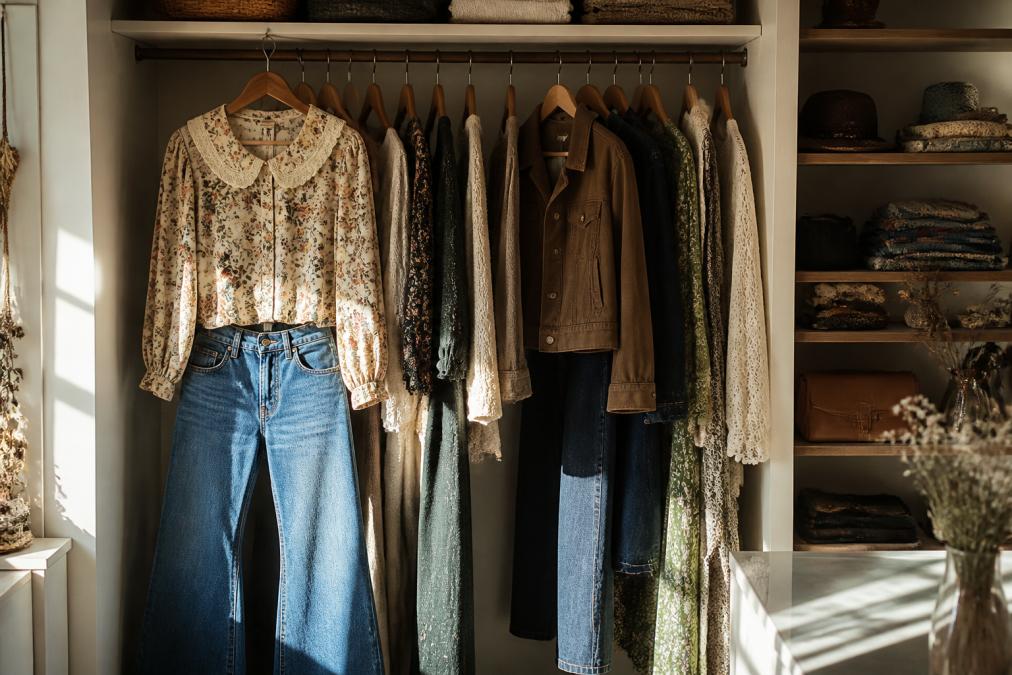
A well-rounded vintage capsule wardrobe checklist covers five core categories: tops, bottoms, outerwear, dresses, and shoes. Within each category, prioritize timeless, high-quality staples over trendy statement pieces. A practical starting module includes two vintage blouses, one classic pair of high-waisted jeans, one structured jacket, one versatile midi dress, and one pair of leather boots.
| Category | Essential Staples | Quantity | Primary Role |
|---|---|---|---|
| Tops | Silk blouse, fitted knit, cotton tee | 3-4 | Layering and standalone wear |
| Bottoms | High-waist jeans, tailored trousers, midi skirt | 2-3 | Anchor pieces for most outfits |
| Outerwear | Structured blazer, denim jacket, trench coat | 2-3 | Adds silhouette and seasonality |
| Dresses | Slip dress, shirt dress, wrap dress | 2 | One-dress outfits for ease |
| Shoes | Ankle boots, loafers, low heels | 2-3 | Complements the color palette |
This checklist is a starting point, not a rigid law. Adjust the quantities to your lifestyle. If you work in an office, swap a casual bottom for an additional tailored pair. If you live in a warm climate, reduce outerwear and add more breathable fabrics.
How to Style Vintage Clothing for Beginners
Styling vintage is easier than expected if you anchor each look with one modern element. The most common mistake is wearing a full vintage outfit head to toe, which feels costume-like. Pair a vintage floral blouse with modern straight-leg jeans, or wear a vintage blazer over a plain contemporary t-shirt.
Use the three-piece rule: one vintage anchor with two modern basics. A 1990s slip dress looks current with a chunky knit cardigan and white sneakers; high-waisted vintage flares pair beautifully with a fitted modern crop top.
How to Identify Quality Vintage Fabrics
Identifying quality vintage fabrics protects you from wasting money. The first test is the fabric content label: natural fibers like 100% cotton, silk, wool, and linen age gracefully and breathe well. Synthetic-heavy blends tend to pill and retain odors.
Beyond the label, inspect construction: high-quality garments have finished seams with no loose threads. Check the lining is intact and breathable. Examine buttons and zippers, metal zippers from mid-century often outlast modern plastic ones. Hold fabric up to the light to check for thinning, which signals the end of its life.
Sizing, Tailoring, and Caring for Your Vintage Pieces
Vintage sizing is a minefield, sizes have shifted over decades and each era had its own fit philosophy. A 1950s dress labeled "size 12" might fit like a modern size 6. Ignore the label entirely and rely on flat measurements.
How to Measure Vintage Garments Like a Pro
Before you buy vintage online or in a thrift store, take these five measurements on a similar garment you already own that fits well:
- Bust: Measure across the front, from under one armhole seam to the other, then double it.
- Waist: Measure across the natural waistline seam, then double.
- Hips: Measure across the widest point (usually 7-9 inches below the waist), then double.
- Shoulder to shoulder: Measure from the shoulder seam at the neck to the shoulder seam at the armhole.
- Sleeve length: Measure from the shoulder seam to the cuff, with the sleeve lying flat.
Compare these numbers to your own garment. If the bust and waist measurements are within 1-2 inches of your reference piece, the fit will likely work. If they are more than 3 inches off, expect to need alterations or skip it.
When to Tailor (and When Not To)
Tailoring is the secret weapon of vintage collectors, but it is not a magic wand. A skilled tailor can:
- Take in or let out side seams (up to about 2 inches total, depending on seam allowance)
- Shorten hems, sleeves, or straps
- Replace zippers or buttons
- Adjust shoulder seams (though this is more complex and costly)
However, avoid tailoring if:
- The garment is heavily beaded or has intricate lace, alterations can damage the detailing.
- The fabric is fragile or has visible thinning, stitching may tear it.
- The garment is more than 2 sizes too large, the proportions will be off even after tailoring.
Typical tailoring costs in the United States range from $15-$30 for hemming pants or skirts, $20-$45 for taking in a waist, and $50-$100 for more complex alterations like resizing shoulders (care.com). Always get a quote before committing.
Caring for Vintage Fabrics: A Fabric-by-Fabric Guide
Vintage fabrics require specialized care. Here is a quick reference:
| Fabric | Cleaning Method | Storage | Special Notes |
|---|---|---|---|
| Silk | Hand-wash in cold water with a gentle detergent (like Woolite) or dry-clean | Fold, never hang (hanging stretches the fibers) | Avoid sunlight; it causes yellowing |
| Wool | Dry-clean or hand-wash in cold water with lanolin-based soap | Fold with cedar blocks to deter moths | Moths love wool; check regularly for holes |
| Rayon | Hand-wash in cold water or dry-clean; rayon shrinks easily | Hang or fold, rayon is prone to stretching | Iron while damp on low heat |
| Cotton | Machine-wash on gentle cycle in cold water | Hang to dry to prevent shrinkage | Vintage cotton may have shrunk already; test a small area first |
| Linen | Hand-wash or machine-wash on gentle in cold water | Hang to dry; iron while damp | Linen wrinkles naturally, embrace it |
| Polyester blends | Machine-wash on gentle in cold water | Hang to dry | Check for pilling; use a fabric shaver if needed |
The Moth and Storage Problem
Moths are the #1 enemy of vintage wool and silk. To protect your investment:
- Use cedar blocks or lavender sachets in your closet and drawers, avoid mothballs, which are toxic and leave a strong odor.
- Store wool sweaters and silk blouses in breathable cotton garment bags, not plastic.
- Vacuum your closet regularly and inspect pieces every few months for signs of moth larvae (tiny holes or webbing).
The Unique Angle: Preserving Value Through Care
Most capsule guides ignore care, but proper maintenance makes vintage a sustainable investment. A well-cared-for 1960s wool coat can last another 50 years, while a neglected one ends up in a landfill.
Start Your Capsule with These Timeless Staples
If you are ready to begin, focus on foundational anchor pieces first. The most versatile item is a pair of high-waisted flare jeans, which flatter most body types and pair with everything from vintage blouses to modern knits. But before spending, let's talk budgeting and sourcing.
How to Budget for Vintage Investment Pieces
A common mistake is buying everything at once. Set a monthly vintage budget based on disposable income; $50-$100 per month is enough to build a solid capsule over 6-12 months. Prioritize spending on:
- Outerwear (e.g., a wool coat or blazer), these are the most expensive but highest-impact pieces.
- Shoes, quality leather boots or loafers can last decades if resoled.
- Silk blouses, natural fibers age well and elevate any outfit.
Save on:
- Basic tees and knits, buy these new or modern, as vintage basics often lack the fit and durability of new ones.
- Trendy statement pieces, skip them; they will date quickly and break your capsule's cohesion.
Where to Source Affordable Vintage Without Sacrificing Quality
The best sources for vintage on a budget are:
- Thrift stores (Goodwill, Salvation Army, local charities), prices range from $5-$20 for tops and $10-$30 for pants. Visit frequently, as inventory changes daily.
- Estate sales, often have high-quality, well-maintained vintage at low prices. Check estate sales.net or local listings.
- Online marketplaces (eBay, Poshmark, Depop), use filters for fabric content and measurements. Look for sellers with high ratings and detailed photos.
- Consignment shops, pricier but curated; you pay for convenience and quality.
Avoid:
- Fast-fashion vintage reproductions, they lack the construction and fabric quality of true vintage.
- Overpriced "curated" vintage boutiques, unless you are willing to pay 3-5x the thrift store price for the convenience.
The 5-Piece Starter Module
Here is a practical, budget-friendly starter module that you can assemble for under $150 if you shop smart:
| Piece | What to Look For | Budget Range | Where to Find |
|---|---|---|---|
| High-waisted flare jeans | 100% cotton denim, minimal stretch, no rips | $20-$40 | Thrift stores, eBay |
| Silk blouse | 100% silk, solid color or subtle print, no stains | $15-$30 | Estate sales, Poshmark |
| Structured blazer | Wool or wool-blend, classic cut, working buttons | $25-$50 | Consignment shops, eBay |
| Midi dress | Fit-and-flare or slip style, natural fiber | $20-$40 | Thrift stores, Depop |
| Leather ankle boots | Real leather, good soles, comfortable heel | $30-$60 | Thrift stores, consignment |
The JazzySuSu Alternative
If you prefer a curated, pre-vetted option, JazzySuSu offers the RetroCurve™ Vintage Flare Bootcut Jeans at $68.99, crafted from a breathable cotton-polyester blend with classic denim fading. While this is higher than thrift prices, it saves you hours of hunting and guarantees quality. The Desert Flower Vintage Print Smocked Poet Collar Blouse adds a romantic layer for $40.99. These pieces are designed to work together and with modern basics, so you can start your capsule immediately.

The Unique Angle: Budgeting as a Strategy
Most guides ignore the financial side of building a capsule. But budgeting is about making intentional choices. By setting a budget and sourcing strategically, you avoid impulse buys and ensure every piece earns its place.
Building a capsule vintage wardrobe is a gradual process, not a weekend project. Start with a thorough audit, define your palette, and invest in a few timeless staples you will wear repeatedly for years.
Frequently Asked Questions
What is the 3-3-3 rule capsule wardrobe?
The 3-3-3 rule is a styling method where you pick just 3 tops, 3 bottoms, and 3 accessories (like shoes or jackets) to create a fresh set of outfits. It is a great way to test the versatility of your capsule vintage wardrobe without committing to a full seasonal overhaul. By mixing these nine items, you can create a variety of looks that feel new, helping you see which pieces earn their place.
How many items should be in a vintage capsule wardrobe?
There is no single magic number, but a common starting point is between 20 and 37 items, including shoes and outerwear. The goal is to have enough pieces to mix and match for a season. A smaller, curated collection of high-quality vintage staples beats a large closet of unworn items. Start with your checklist and adjust based on your lifestyle and laundry habits.
How do you mix vintage pieces with modern basics?
The trick is to balance proportions and eras. Pair one vintage anchor piece, like a high-waisted flare jeans, with a simple, modern fitted t-shirt. This creates a silhouette that feels current rather than like a costume. For beginners, using modern basics as your canvas allows the vintage item to stand out. Finish with contemporary accessories to ground the look.
How do I budget for a capsule vintage wardrobe?
Focus on cost-per-wear rather than upfront price. A $79 pair of well-constructed jeans you wear twice a week costs less per wear than a $20 pair you discard after a few months. Prioritize your anchor pieces, like denim and jackets, and allocate more of your budget there. Save on trend-driven accessories. Building a capsule is a marathon, so shop slowly and intentionally.
What are the best tips for sourcing high-quality vintage clothing?
Always check the fabric content label and look for natural fibers like 100% cotton, silk, or wool, which tend to last longer. Examine the seams and stitching for any signs of pulling or unraveling. Before you buy, consider if a piece can be tailored to fit you. Thrifted and second-hand finds are great, but also look for curated shops that pre-select for quality, saving you time.
Building a wardrobe that reflects your values takes patience, especially when balancing vintage sizing quirks and fabric care. JazzySuSu simplifies the process with a curated collection of vintage-inspired fashion and handpicked jewelry designed to be worn again and again. Explore high-quality pieces that pair seamlessly with your existing closet, and enjoy free shipping on all orders over $100. Get started with JazzySuSu and discover a signature look that lasts beyond any season.