
How to Verify Boutique Clothing Quality
Table of Contents
- How to Verify Boutique Clothing Quality: A Step-by-Step Inspection Guide
- Step 1: Read the Fiber Content and Care Instructions
- Step 2: How to Identify Fabric Quality by Weight and Hand-Feel
- Step 3: Inspect Seams, Stitching, and Seam Allowance
- Step 4: Check Buttons, Zippers, and Hardware Durability
- Step 5: Signs of Well-Made Clothing in Pattern Matching and Hem Finishing
- Step 6: Test for Opacity, Transparency, and Pilling Resistance
- Step 7: Use a Clothing Quality Checklist Before You Buy
Last Updated: August 24, 2026
How to Verify Boutique Clothing Quality: A Step-by-Step Inspection Guide
When shopping for boutique clothing, the price tag doesn't always signal quality. The real test comes down to what you can see, feel, and inspect before you buy. At JazzySuSu, we understand that verifying boutique clothing quality is the difference between a piece you'll wear for years and one that falls apart after a few wears.
This guide walks you through a practical inspection process covering fiber content to hardware durability. By the end, you'll know exactly what separates well-made garments from fast fashion knockoffs dressed up in higher prices.
Step 1: Read the Fiber Content and Care Instructions
Start with the label. Fiber content and care instructions are the first signals of how seriously a brand takes quality. A garment made from 100% natural fibers like cotton, linen, or silk performs differently than one blended with synthetics, affecting durability, comfort, and longevity.
Natural fibers breathe better, age gracefully, and often improve with washing. Cheap synthetics pill easily and lose shape. Look at the percentage breakdown. "95% polyester, 5% elastane" is mostly plastic fiber with minimal stretch, while "65% cotton, 35% linen" offers breathability and natural texture.
Care instructions reveal how a manufacturer expects the garment to be treated. "Dry clean only" signals either delicate construction or expensive materials. "Machine wash cold" means the piece should withstand normal wear. Garments requiring excessive special care often indicate either luxury materials needing protection or poor construction that can't handle standard washing.
Check whether the label lists fiber content by percentage and includes country of origin. Reputable boutique brands provide complete information. Vague labels like "made from quality materials" or missing percentages are red flags.
Step 2: How to Identify Fabric Quality by Weight and Hand-Feel
Run your hand across the fabric. Quality fabrics have density and weight that cheap materials can't replicate. This is where your sense of touch becomes your best inspection tool.
Press the fabric between your fingers. Does it feel substantial or flimsy? High-quality garments use fabric with real weight and structure. A t-shirt that feels thin and papery will lose its shape after a few washes. One that feels substantial will hold up longer.
Feel for consistency across the entire piece. Run your hand from front to back, sleeves, and hem. Quality fabrics maintain the same feel throughout. If one section feels different, thinner, or rougher, that's a sign the brand sourced materials from different suppliers or used lower-grade fabric in less visible areas.
Understanding GSM and Fabric Weight
GSM (grams per square meter) is the standard measurement for fabric weight. Higher GSM generally means denser, more durable fabric. A lightweight cotton t-shirt might be 150-180 GSM, while a quality everyday shirt runs 200-250 GSM. Heavy-duty fabrics like canvas or denim can exceed 400 GSM.
When you pick up a garment, ask yourself: does this fabric feel substantial enough for its intended use? A flowy summer dress should feel lighter than a winter coat, but both should feel intentional and well-constructed within their category.
Testing Natural vs. Synthetic Blends
Natural fibers like cotton, linen, and wool have a warm hand-feel and natural texture. Synthetics like polyester and nylon feel cooler and smoother. High natural fiber content (70% or higher) usually indicates a brand prioritizes feel and breathability (peer-reviewed research). Lower natural content (below 50%) means the garment will likely feel more plastic-like and may not breathe well.
Hold the fabric up to light. Fabrics with high natural content tend to have a slightly translucent quality. Synthetic-heavy fabrics block light more completely. Press the fabric and release it. Natural fibers wrinkle and recover slowly. Synthetics spring back instantly. Quality blends balance both, wrinkling slightly but recovering reasonably well.
Step 3: Inspect Seams, Stitching, and Seam Allowance
Seams are the skeleton of a garment. Poor seams mean the piece will fail at stress points: armpits, shoulders, and side seams, exactly where you need durability most.
Examine seams closely. Look for straight, even stitching that runs parallel to the fabric edge. Wobbly or uneven stitching suggests rushed manufacturing or low-quality equipment. Run your finger along the seam. It should feel smooth and flat.
Check the seam allowance, the fabric between the stitch line and the edge. Quality garments have adequate seam allowance, typically 5/8 inch or more (astm.org). This gives the seam room to hold without fraying and allows for future alterations. Tight seam allowances mean the garment can't be let out, and the seam is more likely to fail under stress.
Look at the inside of the garment. Are seams finished with serging, binding, or a flat-felled seam? Finished seams prevent fraying and extend garment life. Raw seams that fray immediately indicate low-quality construction.
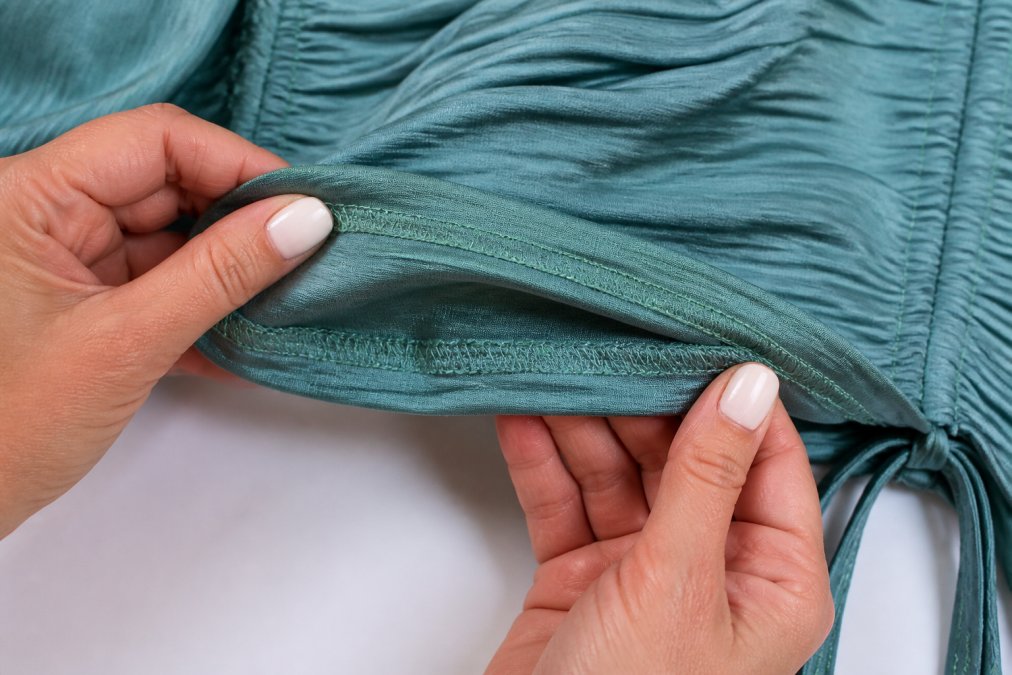
Evaluating Stitch Density and Serging
Stitch density is the number of stitches per inch. Higher density means tighter, stronger seams. Quality garments typically have 10-12 stitches per inch (peer-reviewed research). Fewer stitches per inch (below 8) means the seam is more likely to pop or separate under stress.
Serging is a finishing technique where a machine wraps thread around the seam edge to prevent fraying. It's standard in quality boutique clothing but absent in fast fashion. Check stress points carefully: armholes, shoulder seams, and side seams. If these seams are reinforced with double stitching or bartacks, the garment is built to last.
Step 4: Check Buttons, Zippers, and Hardware Durability
Hardware, buttons, zippers, snaps, and clasps, reveals how much a brand cares about details. Cheap hardware fails first, and replacement is often impossible or costs more than the garment's worth.
Press buttons firmly. Quality buttons are attached with strong thread and multiple passes through the button holes. Wiggle the button gently. It should move slightly but not spin freely. Check the underside of the button. Quality construction includes a thread shank, a small space between the button and fabric created by wrapping thread around the button post.
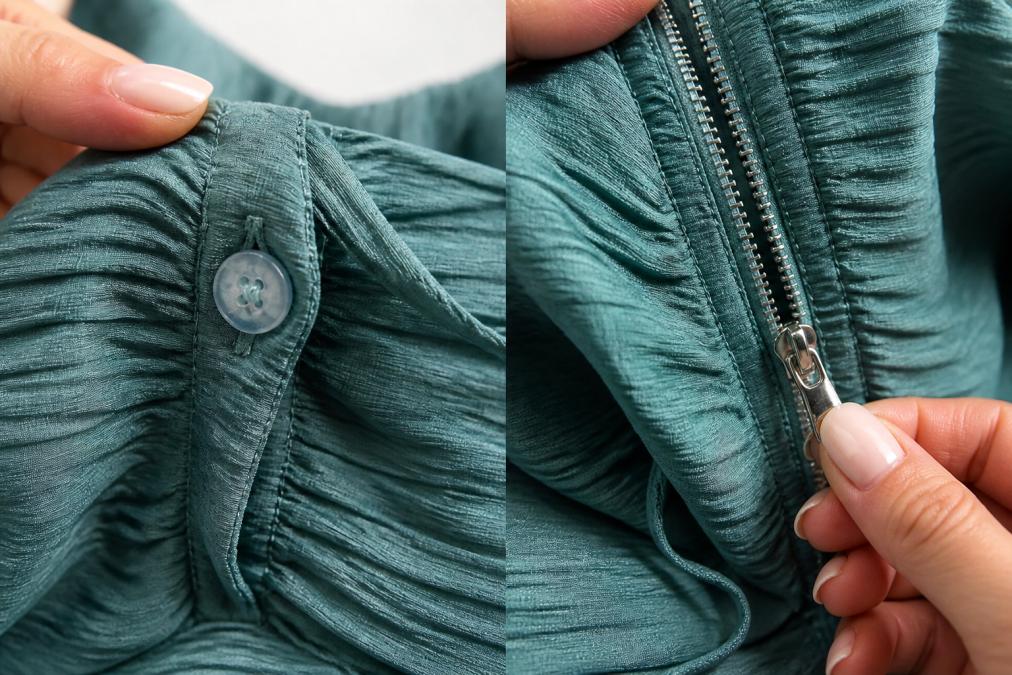
Test zippers by sliding them up and down several times. Quality zippers glide smoothly without catching or sticking. Check the zipper teeth, they should align perfectly and not skip. Metal pulls last longer than plastic. Quality construction includes a zipper stop at the bottom to prevent the slider from coming off.
Snaps and clasps should feel solid and secure. Press them together and pull apart several times. They should stay locked until intentionally released. Check all hardware for finish quality. Metal hardware should be smooth without rough edges. Plating should be even without discoloration.
Step 5: Signs of Well-Made Clothing in Pattern Matching and Hem Finishing
Pattern matching and hem finishing reveal whether a brand's quality control is tight or loose.
Pattern Alignment at Seams
If a garment has a pattern, stripes, checks, prints, or florals, examine how the pattern aligns at seams. Quality construction matches patterns across seams so the design flows continuously. Mismatched patterns at side seams or armholes indicate the garment was cut and sewn without attention to detail.
This is especially visible on striped or checkered fabrics. Look at where the front meets the side seam. Do the stripes line up? What about where the sleeve meets the armhole? Brands that take quality seriously invest time in pattern matching because it's labor-intensive and requires skilled cutting.
Hem Finishing and Embellishment Security
Examine the hem. Is it sewn with even, consistent stitching? Quality garments often use a blind hem stitch that's nearly invisible from the outside. Check hem length consistency. Measure the hem width in several places. Quality garments maintain consistent hem width throughout.
If the garment has embellishments, beads, sequins, embroidery, lace appliqués, test their security. Gently tug on embellishments. They should be firmly attached. Check the stitching on embroidered details. It should be tight and even. Examine any lace or appliqué edges. They should be sewn down completely with no loose edges or gaps.
Step 6: Test for Opacity, Transparency, and Pilling Resistance
Transparency and pilling are common quality failures that become obvious only after purchase and wear. Test for both before you commit.
Hold the garment up to light. Does it show through? For items meant to be opaque, t-shirts, dresses, pants, transparency is a major flaw. Quality fabrics provide adequate opacity without requiring an undershirt.
Rub the fabric surface gently with your hand or a soft brush. Pilling, those small fabric balls that form on the surface, indicates low-quality fibers or loose construction. If you see pilling on a new garment in the store, it will only get worse with washing and wear.
Test the fabric durability by rubbing a small area firmly between your fingers for 10-15 seconds. Quality fabrics maintain their structure. Check for loose fibers. A few loose fibers are normal, but excessive shedding indicates poor fiber bonding.
Step 7: Use a Clothing Quality Checklist Before You Buy
Use this checklist as your final verification tool before purchasing any boutique piece.
| Quality Indicator | What to Check | Pass/Fail |
|---|---|---|
| Fiber Content | Natural fibers 70%+ or intentional synthetic blend | ☐ |
| Fabric Weight | Substantial feel appropriate for garment type | ☐ |
| Seam Quality | Straight, even stitching with adequate seam allowance | ☐ |
| Seam Finishing | Serged, bound, or flat-felled seams (not raw) | ☐ |
| Stitch Density | 10-12 stitches per inch at minimum | ☐ |
| Button Security | Buttons firmly attached with thread shank | ☐ |
| Zipper Function | Smooth glide, aligned teeth, metal pull preferred | ☐ |
| Pattern Matching | Patterns align across seams and placement is intentional | ☐ |
| Hem Consistency | Even width throughout, clean finish inside and out | ☐ |
| Embellishments | Secure attachment, no loose edges or gaps | ☐ |
| Opacity | Adequate coverage without showing through | ☐ |
| Pilling Resistance | No pilling visible, fabric maintains integrity when rubbed | ☐ |
This checklist applies whether you're shopping at JazzySuSu or anywhere else. When you understand what separates quality from mediocrity, you stop overpaying for clothes that won't last.
The pieces at JazzySuSu are selected with this same scrutiny. Our curated collection focuses on garments built to be worn repeatedly, the opposite of fast fashion disposability. When you invest in pieces that pass this verification process, you're investing in a wardrobe that actually lasts.
Shopping for boutique clothing means paying for quality, but only if that quality actually exists. By running through this verification process, you ensure your investment translates into pieces you'll actually wear for years. At JazzySuSu, we believe how to verify boutique clothing quality is a skill every conscious shopper should develop, because it's the difference between building a wardrobe and collecting regrets.
Our team selects every piece in our collection using these same standards. From the Elegant Crop Top Livenza in Mint made from high-quality imitation satin with proper seam construction, to the Women's Casual Solid Color Skirt in 100% cotton with clean finishing, each item is inspected for the markers of durability and craftsmanship outlined in this guide. When you shop with intentionality and know what to look for, you invest in pieces designed to become part of your signature style, not fast fashion that disappears after a season.


Frequently Asked Questions
How can you tell if a garment is well-made by looking at the seams?
Well-made garments have tight, even stitching. Look for serged or finished seams that prevent fraying, consistent stitch density throughout, and no loose threads. Seam allowances should be adequate for durability. Poor-quality clothing shows uneven stitches, loose threads, or raw, unfinished seams that will unravel with washing.
What does fabric weight tell you about clothing quality?
Fabric weight, measured in GSM (grams per square meter), can indicate durability and longevity. Heavier fabrics typically last longer and resist pilling better than lightweight options. Natural fibers like cotton and linen at higher weights can feel substantial and drape well. Check the product details for GSM or feel the fabric in hand, quality pieces should feel dense and substantial, not flimsy or thin.
How do you check for quality when shopping for boutique clothing online?
Request detailed photos showing seams, stitching, hardware, and fabric texture from multiple angles. Read the fiber content label carefully, look for high percentages of natural fibers or quality blends. Check reviews mentioning durability and post-wash performance. Ask about return policies in case the garment doesn't meet your quality expectations upon arrival.
What are the signs of poor-quality construction in apparel?
Red flags include uneven or loose stitching, fraying seams, misaligned patterns, weak hardware that feels cheap, thin or flimsy fabric, and vague fiber content labels. Poor-quality garments may show pilling after one or two wears, shrink unpredictably, and lose their shape quickly. Cheap embellishments may fall off easily, and hems may unravel. These issues are common in fast fashion but are generally avoided in well-made boutique pieces designed for repeated wear.
This article was written using GrandRanker