
Create a 90s Minimalist Capsule Wardrobe: 2026 Guide
Table of Contents
- What Is a 90s Minimalist Capsule Wardrobe
- 90s Capsule Wardrobe Essentials You Need
- How to Build a Capsule Wardrobe: Step-by-Step
- 15 Piece Capsule Wardrobe Template with Outfit Combinations
- Creating 90s Minimalist Outfits for 2026
- Common Mistakes to Avoid When Building Your Wardrobe
- Frequently Asked Questions
Last Updated: October 19, 2026
What Is a 90s Minimalist Capsule Wardrobe
A 90s minimalist capsule wardrobe is a curated collection of essential pieces that work together to create multiple outfits. Think clean lines, neutral colors, and timeless silhouettes inspired by 1990s fashion.
This approach combines two powerful ideas. First, the capsule wardrobe concept focuses on quality over quantity. Second, 90s minimalism strips away excess to celebrate understated elegance.
The beauty of building a 90s minimalist capsule wardrobe in 2026 is simplicity. You choose neutral tones, invest in well-fitting basics, and add a few statement pieces.
At JazzySuSu, we help you discover the vintage-inspired pieces that anchor this aesthetic. Our curated selection focuses on timeless basics and quality essentials designed to be worn again and again.
90s Capsule Wardrobe Essentials You Need
Building a strong foundation starts with understanding which pieces actually work together. The essentials fall into clear categories that build on each other.
Neutral Base Tones and Clean Lines
Neutral colors are the backbone of any 90s minimalist capsule wardrobe. Black, white, cream, beige, and soft brown create a cohesive palette that lets every piece work with everything else.
These tones work because they're versatile. A white tank pairs with black jeans or a cream slip dress. A beige blazer layers over any basic tee. The key is choosing neutrals that feel natural to you. Some people prefer cool tones like white and gray. Others lean toward warm tones like cream and camel.
Clean lines matter just as much as color. Look for pieces without excess details. Straight seams, simple necklines, minimal embellishment. This is where the 90s minimalism shows, the silhouette speaks for itself without needing decoration.
Slip Dresses and Satin Pieces
The slip dress is the signature piece of 90s minimalism. A simple satin slip dress in black, white, or cream becomes the foundation for countless outfits.
Wear it alone with minimal jewelry. Layer it over a white or black tee. Throw a tailored blazer over it for a polished look. The versatility is remarkable. A quality satin slip dress works for casual days, work settings, and going out. This single piece justifies investing in quality fabric.
Look for slip dresses with simple construction. Thin straps, a straight cut through the body, minimal seaming. Avoid anything with ruffles, lace, or complex detailing. The appeal is in the simplicity.
Basic Tees, Tanks, and Camisoles
White and black basic tees are non-negotiable. These simple pieces layer under slip dresses, pair with jeans, and work under blazers. A quality basic tee should feel soft and hold its shape after washing.
Tank tops and camisoles add another layering option. A white tank under a slip dress creates visual interest without bulk. A black camisole works under sheer pieces or worn alone in warm weather. Keep these simple with minimal seaming and a clean fit.
The goal is to have enough basics that you're never searching for a plain tee. Most people need at least three white basics and three black basics to rotate through laundry cycles.
Straight-Leg Denim and Tailored Pieces
Straight-leg jeans are the denim choice for 90s minimalism. They're flattering on most body types and feel modern without trending toward skinny or oversized.
Light-wash denim offers versatility for daytime wear. Dark wash or black denim works for evening and layering. A well-fitting straight-leg jean in both washes covers most occasions. The fit matters more than anything else. Jeans that fit properly at the waist, hips, and length will become your most-worn piece.
Beyond denim, tailored pieces elevate the entire wardrobe. A simple blazer in black, cream, or camel instantly makes any outfit more polished. A waistcoat or vest adds layering options. Tailored trousers in neutral tones work with everything.
How to Build a Capsule Wardrobe: Step-by-Step
Building a 90s minimalist capsule wardrobe doesn't happen overnight. A thoughtful process ensures you choose pieces you'll actually wear.
Step 1: Assess Your Lifestyle and Color Preferences
Before buying anything, think about how you actually spend your time. Do you work in an office, work from home, or attend school? Do you go out socially on weekends? What's your climate like?
Your lifestyle determines which pieces matter most. Someone working in an office needs more tailored pieces and blazers. Someone working from home might prioritize comfort basics. Someone in a warm climate needs lighter fabrics and fewer layers.
Also notice which neutral tones you naturally reach for. Do you wear more black or more cream? Do you prefer cool-toned grays or warm-toned taupes? Your color preference should guide your palette. Fighting against your natural instincts means you won't wear what you buy.
Step 2: Choose Your Neutral Foundation
Once you know your lifestyle and color preference, commit to a primary neutral palette. This might be black, white, and cream. Or it might be beige, white, and soft brown. The exact colors matter less than consistency.
Having a committed palette means every piece you buy works with every other piece. This is what makes a capsule wardrobe function. You're not buying random items, you're building a system where combinations are endless.
Write down your chosen neutrals. Keep this list when shopping. It prevents impulse buys that don't fit your system. It also makes shopping faster because you know exactly what you're looking for.
Step 3: Add Core Pieces and Mix-and-Match Items
Start with the basics: three to five plain tees, two to three tanks or camisoles, one or two slip dresses, and two pairs of jeans in different washes.
Then add layering pieces: one blazer, one waistcoat or vest, and one cardigan. These transform your basics into different outfits. A plain tee becomes three different looks depending on what you layer over it.
Finally, add one or two statement pieces that still fit your aesthetic. This might be a vintage band tee, a patterned scarf, or a simple sweater in a soft texture. These pieces add personality without breaking the minimalist feel.
Step 4: Invest in Quality and Fit
This step separates a capsule wardrobe that works from one that falls apart. Quality matters because you'll wear these pieces constantly. Fit matters because ill-fitting clothes never get worn, no matter how much you paid for them.
Spend more on basics you'll wear weekly. A quality white tee costs more upfront but lasts longer and looks better. Spend less on trend pieces you might not wear for years. But never buy something that doesn't fit properly, regardless of price.
Check seams, hems, and fabric weight. Try things on if possible. If buying online, know the return policy. JazzySuSu offers free shipping on orders over $100.
15 Piece Capsule Wardrobe Template with Outfit Combinations
Here's a complete starting point for a 90s minimalist capsule wardrobe in 2026:
| Piece | Color | Count | Purpose |
|---|---|---|---|
| Basic tee | White | 2 | Layering, everyday wear |
| Basic tee | Black | 2 | Layering, everyday wear |
| Tank top | White | 1 | Layering, warm weather |
| Camisole | Black | 1 | Layering, under sheer pieces |
| Slip dress | Black | 1 | Statement piece, layering base |
| Slip dress | Cream | 1 | Statement piece, lighter option |
| Straight-leg jeans | Light wash | 1 | Daytime, casual |
| Straight-leg jeans | Dark wash | 1 | Versatile, dressier |
| Blazer | Black or cream | 1 | Polishing any outfit |
| Waistcoat or vest | Neutral | 1 | Layering, visual interest |
| Button-down shirt | White | 1 | Layering, structured wear |
| Cardigan | Neutral | 1 | Layering, warmth |
| Trousers | Black | 1 | Tailored alternative to jeans |
| Sneakers | White | 1 | Casual footwear |
| Simple accessories | Various | 3-5 | Minimal jewelry, scarves |
Sample outfit combinations:
Casual weekend: Black jeans + white tee + white sneakers + simple necklace
Work meeting: Dark wash jeans + white button-down + black blazer + black trousers
Evening out: Black slip dress + black blazer + minimal jewelry
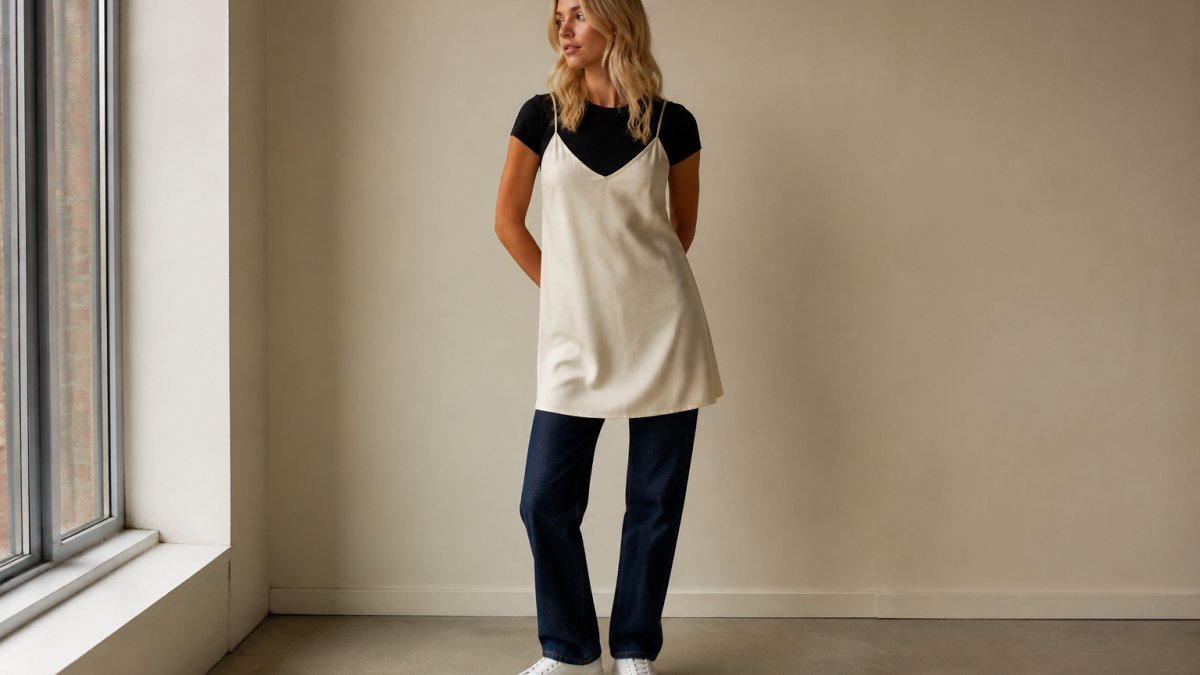
Layered look: Cream slip dress + black tee + light-wash jeans + cardigan
Warm day: White tank + cream slip dress + light-wash jeans + white sneakers
The magic is that these 15 pieces create dozens of different outfits. You're not buying more, you're choosing smarter.
Creating 90s Minimalist Outfits for 2026
Once you have your foundation pieces, styling becomes about layering and proportion.
Layering and Simple Silhouettes
Layering is how 90s minimalism creates visual interest without adding pieces. Start with a basic tee. Add a slip dress over it. The two simple pieces create texture and depth through their interaction.
A slip dress over a white tee is the classic 90s look. The white peeks out at the neckline and arms. A black tee under a cream slip dress creates contrast.
Proportions matter when layering. If your slip dress is fitted, wear a fitted tee underneath. If your slip dress is looser, a fitted tee still works but creates a different silhouette.
Silhouettes should remain clean and simple. Avoid pieces with excess volume, ruffles, or complex details. The beauty comes from how the pieces work together, not from the pieces themselves.
Seasonal Adaptations and Lifestyle Dressing
A 90s minimalist capsule wardrobe adapts to seasons and occasions. In summer, wear slip dresses alone or with just a tank underneath. Add a lightweight cardigan for air-conditioned spaces.
In winter, layer your slip dresses over long-sleeve tees. Add a blazer and cardigan for warmth. Switch to darker washes of denim. The same pieces work year-round with different layering.
For work settings, lead with tailored pieces. Wear your slip dress with a blazer and trousers instead of jeans. Add a structured button-down under your blazer. These pieces signal professionalism while maintaining the minimalist aesthetic.
For casual settings, lean into the basics. Jeans, a simple tee, and sneakers is perfectly acceptable. Add a cardigan if you need warmth. The simplicity is the point.
Common Mistakes to Avoid When Building Your Wardrobe
Most people make predictable errors when building a 90s minimalist capsule wardrobe. Knowing these helps you avoid wasting money.
The biggest mistake is buying too many pieces at once. You feel excited and purchase ten things.
Another common error is choosing colors that don't work together. You pick black and navy, which look close but don't actually match.
Many people also ignore fit in favor of price. A cheap tee that doesn't fit right never gets worn. A more expensive tee that fits perfectly becomes a staple.
Finally, avoid buying trendy pieces that don't fit the minimalist aesthetic.
Building a 90s minimalist capsule wardrobe takes intention and patience, but the result is a closet that actually works for you.
Frequently Asked Questions
What is a 90s minimalist capsule wardrobe?
A 90s minimalist capsule wardrobe is a curated collection of essential pieces built on neutral tones, clean lines, and effortless silhouettes inspired by 1990s design. It focuses on quality over quantity, featuring timeless basics like slip dresses, white button-downs, straight-leg denim, and tailored blazers that mix and match to create multiple outfits. The goal is to own fewer pieces that work together seamlessly, reducing decision fatigue and supporting sustainable fashion choices.
How many pieces should be in a 90s minimalist capsule wardrobe?
A functional 90s minimalist capsule typically contains 15-20 core pieces that form the foundation of your wardrobe. This count includes basics like neutral tees, tanks, a white button-down, slip dress, straight-leg jeans, blazer, and layering pieces. The exact number depends on your lifestyle, climate, and how many outfit combinations you need. Starting with 15 pieces allows you to build outfits while keeping the collection manageable and intentional.
What colors work best for a 90s minimalist wardrobe?
Neutral tones form the foundation of 90s minimalism: black, white, cream, beige, brown, and gray. These colors create a cohesive palette that allows pieces to mix and match effortlessly. A slip dress in cream pairs with a brown blazer and black jeans; a white tee layers under a black waistcoat. Limit statement pieces or deeper tones to one or two accent colors that complement your skin tone and personal style, keeping the overall aesthetic understated and timeless.
How do I make 90s minimalist outfits look modern in 2026?
Update 90s minimalism for 2026 by pairing classic pieces with contemporary styling: wear a slip dress with modern sneakers and a crossbody bag instead of heels, layer oversized blazers with fitted basics, and experiment with pedal pushers or light-wash denim shorts for a fresh take. Add minimal jewelry, keep hair and makeup understated, and focus on fit, tailored, clean lines feel current. Mixing vintage-inspired pieces with modern accessories bridges nostalgic fashion and contemporary style without looking costume-like.