
How to Mix Vintage and Modern Clothing: 7 Styling Steps
Table of Contents
- Start With a Vintage Anchor and Build Modern Basics Around It
- A Step-by-Step Method for How to Style Vintage Clothes
- Vintage Clothing Outfit Ideas for Everyday, Work, and Weekends
- How to Make Vintage Clothing Look Modern With Accessories and Grooming
- How to Wear Vintage Prints Without Looking Like a Costume
- Fit, Tailoring, and Comfort Checks Before You Leave the House
- Care, Sourcing, and Budget Tips for Vintage and Modern Clothing
- Conclusion
- Frequently Asked Questions
Last Updated: October 17, 2026
Start With a Vintage Anchor and Build Modern Basics Around It
The fastest way to master how to mix vintage and modern clothing is to build every outfit around one vintage anchor piece, then surround it with clean modern basics.
A vintage anchor is the single garment that sets the mood of your outfit, such as a 1950s-inspired dress, a suede jacket, or a floral skirt.
The anchor method gives every outfit a clear focal point, stops you piling on era cues until the look reads as a costume, and makes getting dressed faster.
A Step-by-Step Method for How to Style Vintage Clothes
Learning how to style vintage clothes comes down to three quick steps: pick one era cue, add two modern pieces, then check proportion.
Step 1: Pick One Era Cue
Choose a single era signal and commit to it. That might be a high neckline, a full skirt, a floral print, or a piece of vintage jewelry.
Do not stack multiple era cues at once. One is a statement. Three is a costume.
Step 2: Add Two Modern Pieces
Now add exactly two current pieces: a modern denim jacket and white sneakers, a plain knit sweater and slim jeans, or a simple blazer and ankle boots. Two is the sweet spot, contrast without diluting the anchor. Coming from an all-vintage wardrobe, expect this to feel bare at first. That is the point.

Step 3: Check Proportion and Silhouette
Look in a full-length mirror and check the silhouette. If the anchor is full and long, balance it with something fitted up top or on the leg. If the anchor is tight, add volume elsewhere. Proportion separates a styled outfit from a thrown-together one, adjust one element, then look again.
| Step | What You Do | Time | Quick Check |
|---|---|---|---|
| 1. Era cue | Choose one vintage anchor | 1 min | Can you name the era in one word? |
| 2. Modern pieces | Add exactly two current items | 3 min | Are both pieces clearly modern? |
| 3. Proportion | Balance volume and fit | 2 min | Does the silhouette look intentional? |
Vintage Clothing Outfit Ideas for Everyday, Work, and Weekends
Vintage clothing outfit ideas work best when you match the anchor to the occasion and the weather, not just the mood. A full floral dress suits a weekend market; a tailored vintage jacket suits the office.
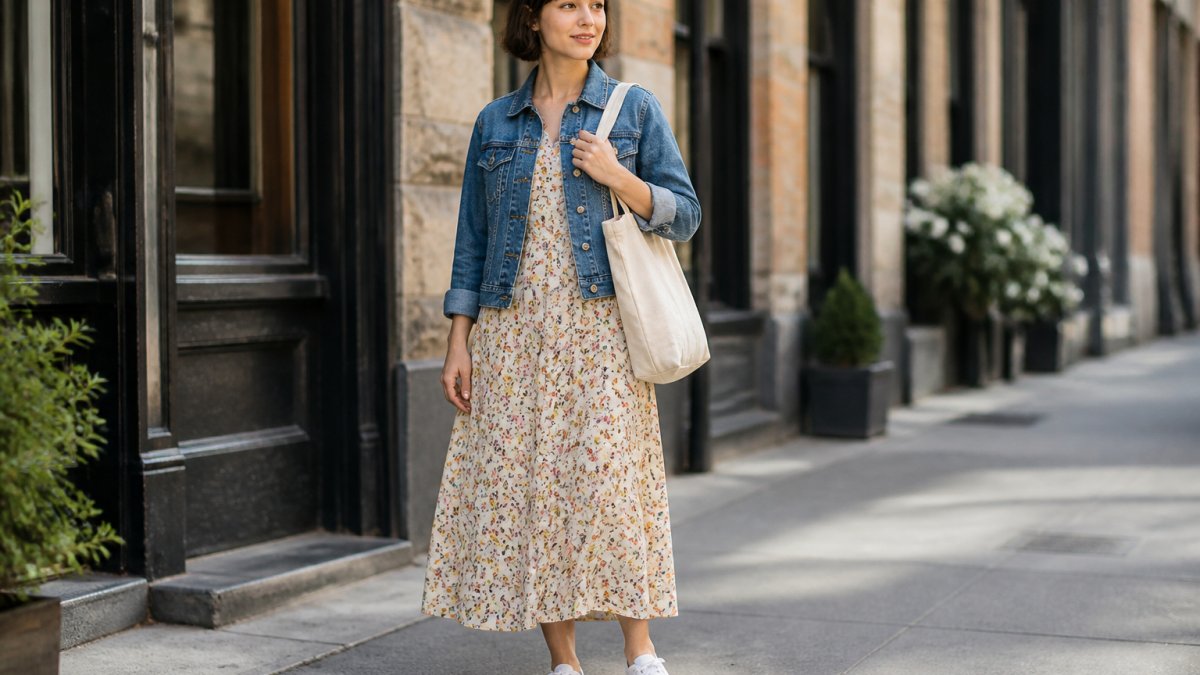
Everyday errands and casual days
- Warm weather: A floral vintage midi dress + a plain white tee layered underneath (or a cropped cardigan) + flat canvas sneakers + a structured crossbody bag. The tee keeps the neckline current; the sneakers kill any costume read.
- Cool weather: The same dress + a modern crewneck sweater over the top (tucked at the waist) + ankle boots + a wool coat. The sweater-over-dress move is the most reliable way to winterize a vintage dress without buying anything new.
- Why it works: One era cue (the print), two clearly modern pieces (sneakers and bag), and proportion checked, a full skirt balanced by a fitted top layer.
Work and office
- Warm weather: A vintage-inspired midi dress with a high neckline + a modern single-breasted blazer + simple loafers or low block heels + minimal jewelry. Keep the print small-scale; large florals read casual.
- Cool weather: A vintage tailored jacket (tweed, corduroy, or a boxy wool blazer) + modern straight-leg trousers + a fine-gauge knit + leather ankle boots. The jacket is the anchor; everything else is current.
- Trade-off to know: Vintage jackets often have shorter sleeves and higher armholes than modern blazers. If the sleeves hit above the wrist bone, push them up intentionally or have a tailor let them down, never wear a too-short sleeve with a buttoned cuff.
Weekends and social plans
- Warm weather: Vintage slim jeans + a fresh white tee + a modern oversized shirt worn open + clean sneakers. The vintage wash is the era cue; the shirt and sneakers are the modern counterweight.
- Cool weather: Vintage slim jeans + a modern chunky knit + a suede or leather vintage jacket + boots. One textured vintage piece, one smooth modern knit.
- Event version: A vintage slip dress or full-skirted dress + a modern fitted blazer or cropped jacket + heeled sandals or sleek boots + one piece of vintage jewelry. Skip period hair and makeup; a clean ponytail or loose waves keeps it current.
How to adapt any of these to your season and climate
- Layering rule: When it is cold, add modern layers under or over the vintage anchor rather than more vintage pieces. A modern turtleneck under a vintage dress, or a modern coat over it, keeps the era count at one.
- Footwear rule: Modern shoes are the fastest seasonal swap. Sandals in summer, sneakers in spring and fall, boots in winter, the same anchor dress can carry all three.
- Fabric rule: Cotton and linen vintage pieces breathe in heat; wool, suede, and corduroy are built for cold. Match the anchor fabric to the season before you style it.
Our Painted Floral Vintage Dress is built for exactly this kind of styling: a high neckline, a full longer skirt with hidden side pockets, a back zipper, and 100% cotton. Pair it with modern sneakers for daytime or a blazer for the office, and layer a modern knit underneath when the temperature drops.

How to Make Vintage Clothing Look Modern With Accessories and Grooming
The quickest way to make vintage clothing look modern is through accessories and grooming, not the clothes themselves. Swap one vintage accessory for a clean modern one and the whole outfit shifts current.
Our Vintage Charm Triple Layered Necklace is a good example of vintage detail done right. It gives you the layered look without stacking, so it adds nostalgia without tipping into costume.
How to Wear Vintage Prints Without Looking Like a Costume
To wear vintage prints well, treat the print as your only bold element and keep everything else solid and neutral. A floral print with plain denim and a white tee looks styled; the same print with a striped top and patterned shoes looks like a costume.
Painted Floral Vintage Dress →
If you are wondering how to wear vintage prints for work, choose a smaller-scale print and pair it with a solid blazer. Large florals read casual; small prints read polished.
Fit, Tailoring, and Comfort Checks Before You Leave the House
Fit is where most vintage outfits quietly fail. Vintage sizing runs differently from modern sizing, so check measurements rather than trusting the label. A garment that pinches or pulls will never look styled.
Run this checklist before you walk out the door:
- Can you raise your arms without the shoulders pulling?
- Does the waist sit where it should, not ride up or dig in?
- Can you sit down comfortably in the skirt or trousers?
A good tailor can fix most fit issues for a modest fee, taking in a waist or shortening a hem transforms how a vintage piece wears. Our Wildflower Vintage Dress is cut true to size in 100% cotton with a full skirt and pockets, so it wears for a full day rather than an hour.

Care, Sourcing, and Budget Tips for Vintage and Modern Clothing
Caring for vintage pieces properly keeps them wearable for years. Sourcing well takes a little patience and a repeatable process. This section covers both, plus the budget math most guides skip.
Care and preservation
- Washing: Wash cotton and linen in cold water and air dry when you can. Heat is the enemy of old fabric, hot water and a hot dryer shrink and weaken already-aged fibers.
- Delicates: Hand-wash or use a mesh bag for lace, silk, and anything with hand-stitched seams. If a piece has no care label, treat it as delicate.
- Storage: Store knits folded, not hung, hanging stretches shoulders. Hang structured jackets and dresses on padded hangers. Keep wool and suede away from damp and direct sun.
Sourcing: where to look and what to check
- Estate sales and local vintage shops are best for one-of-a-kind finds and inspecting condition in person.
- Online is where measurements matter most. Ask for flat measurements, pit-to-pit, waist, length, and compare them to a garment you own that fits well. Do not trust the label size.
- Condition grading: Ask sellers to describe condition in plain terms, excellent (no flaws), good (minor wear, maybe a small mark), fair (visible wear or a repair), or as-is (needs work). Price should drop with each grade.
Authenticity and avoiding overpaying
- Ask about fabric and construction. If a seller cannot tell you the fiber content or how the piece is finished, ask before you buy. Good sellers answer happily.
- Check the era cues against the price. A piece marketed as a specific era should show that era's construction details, zipper type, seam finish, label style. If the details do not match the story, walk away.
- Set a per-season budget rather than buying impulsively. Allocate a fixed amount per season, spend most of it on one or two versatile anchors, then fill gaps with modern basics you already own.
Our AJ738SL-3 Grey/White Vintage Slim Jeans show how a vintage wash can work as an everyday basic. With a mid rise, stretch fabric, a ripped slim leg, five pockets, belt loops, and a zip fly, they pair easily with modern tops and hold up to regular wear.
Conclusion
Mixing eras takes confidence, and confidence comes from a repeatable method: start with one vintage anchor, add two modern pieces, and check your proportion before you leave.
JazzySuSu curates vintage-inspired fashion and handpicked jewelry for exactly this kind of styling, with free shipping on orders over $100. Explore our dresses and jeans to find an anchor piece you will wear again and again, then build your modern basics around it.
Frequently Asked Questions
How do you mix vintage and modern clothing without looking like you're in a costume?
Keep one vintage piece as the focal point and surround it with modern basics. For example, pair a floral vintage-style dress with a plain white tee layered underneath, fresh sneakers, and a simple crossbody bag. Limit era cues to one or two details, such as a high neckline or a full skirt, and let the rest of the outfit read as current. Neutral colors and clean lines in your modern pieces anchor the look and keep it grounded.
What modern basics pair well with vintage clothing?
Start with pieces that have simple shapes and no competing details: plain white tees, slim or straight-leg jeans, a crisp button-down, a fine-knit sweater, and a tailored blazer. Modern sneakers, ankle boots, and minimal leather accessories also work well. These basics let the vintage item stand out while keeping the overall outfit balanced. Stick to neutral colors like white, black, navy, grey, and tan so the vintage piece stays the star.
How do you mix vintage prints with modern pieces?
Choose one vintage print, such as a floral dress or a patterned blouse, and pair it with solid modern pieces in neutral colors. If you want to mix patterns, keep the scale different: a small vintage floral with a wide modern stripe, for example. Use a modern jacket or cardigan to break up the print and add contrast. Avoid matching the print with another busy pattern in a similar scale, which can make the outfit feel dated.
How can you make vintage clothing look modern?
Update the styling around the vintage piece. Swap vintage accessories for modern ones, like a structured leather bag or simple gold jewelry. Add current footwear such as white sneakers or chunky boots. Keep hair and makeup fresh and minimal. You can also layer a modern piece over the vintage item, like a denim jacket over a vintage dress. The goal is to let the vintage piece feel intentional rather than like a full period outfit.