
Vintage Wedding Dresses vs Modern Bridal Gowns: 2026 Guide
Table of Contents
- Vintage Wedding Dresses vs Modern Bridal Gowns: The Quick Comparison
- Key Features of Modern Bridal Gowns
- Characteristics of Vintage Wedding Dresses
- Vintage-Inspired Wedding Dresses: The Middle Path
- Budget Comparison: What You Actually Pay for Each Option
- Altering a Vintage Wedding Gown: Logistics, Cost, and Risks
- How to Style a Vintage Wedding Dress for a Modern Wedding
- Sustainability, Sourcing, and What to Ask Before You Buy
- Frequently Asked Questions
Last Updated: September 24, 2026
Vintage Wedding Dresses vs Modern Bridal Gowns: The Quick Comparison
Choosing between vintage wedding dresses and modern bridal gowns comes down to one question: do you want a dress that already has a history, or one built entirely around you? Vintage gowns offer character, craftsmanship, and a smaller environmental footprint. Modern gowns offer precise fit, current construction methods, and easier alterations. This guide from JazzySuSu breaks down cost, fit, sourcing, and styling so you can decide with clear eyes.
The choice matters more now than it did a decade ago. Resale and vintage bridal shopping have moved from niche to mainstream, and brides increasingly weigh sustainability alongside style. Below, we'll show you exactly how each option performs on budget, alterations, and venue fit, and where the middle path, vintage-inspired dresses, quietly wins for most people.
| Factor | Vintage Wedding Dresses | Modern Bridal Gowns |
|---|---|---|
| Typical condition | Worn, may need restoration | New, ready to wear |
| Fit | Fixed to original owner | Sized or custom to you |
| Alteration risk | Higher, delicate fabrics | Lower, standard construction |
| Sourcing | Estate sales, consignment, heirloom | Designers, boutiques, made-to-order |
| Sustainability | Strong, already exists | Varies by maker |
| Best for | Character, budget flexibility | Fit precision, low risk |
Key Features of Modern Bridal Gowns
Modern bridal gowns are built around structure and fit engineering. A structured bodice, hidden boning, and built-in cups are standard in contemporary designs, which means the dress holds its shape without heavy undergarments. Plunging necklines, illusion panels, and exaggerated sleeves like bishop sleeves show up across current collections.
Fabric choice drives both look and price. Satin finish fabrics read sleek and architectural, while tulle, crepe, and organza create volume or drape depending on the cut.
Characteristics of Vintage Wedding Dresses
Vintage also means one-of-a-kind. You won't see your dress on anyone else, but you also can't reorder it in another size if the fit is wrong.
Vintage-Inspired Wedding Dresses: The Middle Path
Vintage-inspired wedding dresses give you the aesthetic of an earlier era with the construction of a new garment. This is the category most brides should start with, because it removes the two biggest risks of true vintage: uncertain sizing and fragile fabric.
Budget Comparison: What You Actually Pay for Each Option
Most comparisons stop at the sticker price. The real number is the all-in cost: purchase, restoration or alteration, cleaning, and the risk of a garment that can't be saved. Here's how the two paths actually break down.
- Inspection and assessment. A qualified seamstress or bridal alterations specialist typically charges an hourly rate just to evaluate seams, fabric integrity, and whether the gown can be safely worked on. This happens before you commit.
- Restoration. Replacing shattered silk, re-sewing beading, or rebuilding a bodice can rival or exceed the cost of a new gown, and period-correct lace or trim is often sourced piece by piece from specialty dealers.
- Cleaning. Aged textiles usually need specialty dry cleaning rather than standard drop-off service, because solvents and agitation can damage fragile fibers.
- Resizing. Narrow seam allowances mean a vintage gown can often only be taken in, not let out. If it's too small, the fix may be adding a panel or corset back, which changes the design.
Altering a Vintage Wedding Gown: Logistics, Cost, and Risks
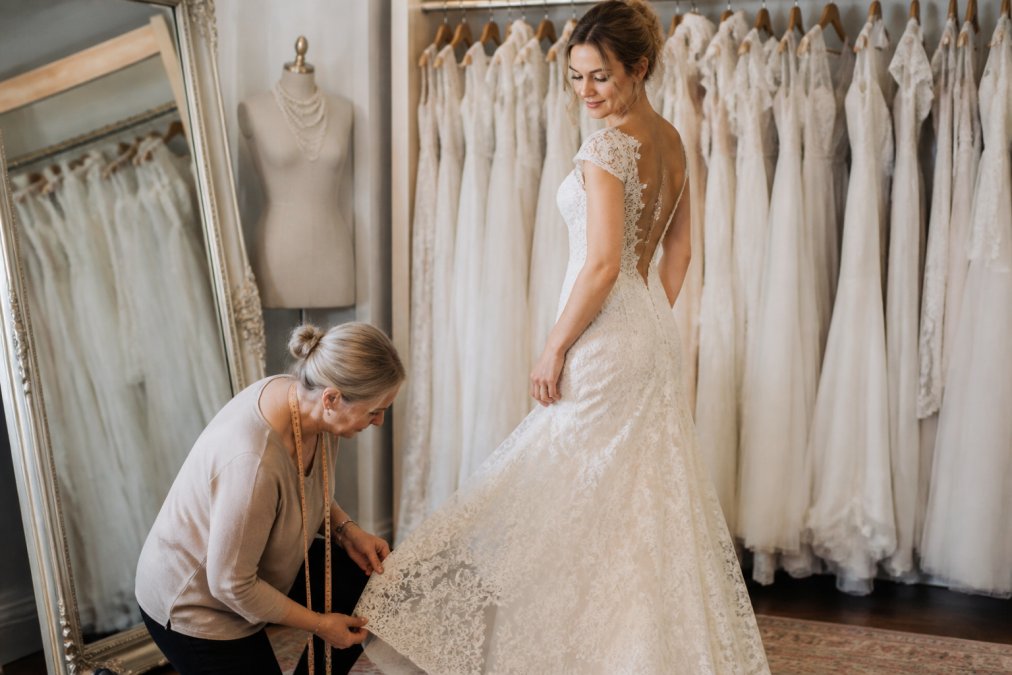
Altering a vintage wedding gown is harder than altering a new one, and the reasons are structural. Old fabric has less give, seam allowances were often cut narrow, and original lace is irreplaceable if a piece is damaged during the work.
Expect these realities:
- Limited seam allowance. Many vintage gowns can only be let out slightly, or not at all.
- Fragile fabric. Pins and needles leave permanent marks in aged silk and fine lace.
- Matching materials. Sourcing period-correct lace or trim for repairs is slow and unpredictable.
- Specialist labor. Not every tailor works on vintage garments, and those who do charge accordingly.
How to Style a Vintage Wedding Dress for a Modern Wedding
Styling a vintage wedding dress for a modern wedding is about contrast, but the right contrast depends on the era of the gown and the venue you're standing in. A 1950s tea-length dress and a 1970s empire-waist gown call for different modern counterweights, and a barn reads differently than a ballroom.

Match the era to the venue.
-
Ballroom or formal hotel. Structured 1950s and 1960s gowns with full skirts, boned bodices, and modest necklines hold their own against high ceilings and chandeliers. A cathedral train or a crisp satin finish photographs well under warm interior lighting.
-
Barn, farm, or outdoor rustic venue. 1970s bohemian and prairie-influenced gowns, with their looser silhouettes, bishop or bell sleeves, and crochet or guipure lace, sit naturally against wood, hay, and open sky. Heavy beading and stiff satin tend to look out of place.
-
Garden or conservatory. 1920s and 1930s bias-cut gowns in silk or crepe drape beautifully in soft natural light. Slip-style and tea-length cuts move well on grass and gravel.
-
City hall or modern loft. 1960s mod-inspired shifts, midi lengths, and clean-lined 1990s minimalism read intentional against concrete, glass, and industrial finishes. Ornate lace can get lost.
-
Beach or destination. Lightweight 1930s and 1940s gowns in cotton lace or rayon travel better and handle heat and sand more gracefully than heavy structured pieces.
-
Accessories. Clean, minimal jewelry lets lace and beading stay the focus. If the gown has a high neckline, skip the necklace and lean on earrings.
-
Hair. Soft, undone styles read modern against a structured vintage bodice. A sleek low bun or loose waves both work; period-accurate updos tend to tip the look into costume.
-
Shoes. A sleek heel or simple block heel grounds an ornate gown. Match the formality of the venue, not the era of the dress.
-
Makeup. A modern, skin-focused look keeps the overall effect contemporary even when the gown is unmistakably vintage.
Sustainability, Sourcing, and What to Ask Before You Buy
Sustainability in bridal fashion comes down to one principle: the most sustainable dress is the one that already exists or the one you'll wear more than once. Vintage and upcycling score highest because no new material is produced. Vintage-inspired new garments land in the middle, depending on fabric composition and how the maker sources materials.
- What is the fabric composition, and how does it age?
- For vintage: has it been inspected for seam and fabric failure?
- For new: is the piece made-to-order, and can it be altered later?
- What is the return or exchange policy if the fit is wrong?
- Can the dress be cleaned and preserved without damaging it?
Frequently Asked Questions
Why do some brides choose a vintage wedding dress over a new one?
Brides choose vintage wedding dresses for three main reasons: uniqueness, craftsmanship, and sustainability. A genuine vintage gown from the 1920s through the 1990s often features hand-finished lace detailing, beading, or embroidery that mass production cannot replicate. Buying secondhand also keeps a garment out of landfill, which matters to eco-conscious shoppers. The trade-off is limited sizing, potential restoration costs, and fewer return options. Vintage-inspired wedding dresses offer a middle path: the retro aesthetic with modern sizing and return policies.
Is a 20-year-old wedding dress considered vintage?
In fashion terms, garments are generally considered vintage once they are at least 20 years old, so a dress from 2006 or earlier qualifies. Anything over 100 years old is usually classified as antique. That means a gown from the early 2000s counts as vintage today, which surprises many brides. If you are shopping for a retro look, you can search consignment shops and estate sales for dresses from the 1980s, 1990s, or early 2000s and still call them vintage.
What are the pros and cons of wearing a vintage wedding dress?
Pros: one-of-a-kind design, often higher-quality fabric and construction, lower purchase price than new couture, and a smaller environmental footprint. Cons: limited sizes, delicate or yellowed fabric that may need restoration, difficulty finding matching accessories, and alteration costs that can exceed the purchase price. Modern bridal gowns offer easier sizing, built-in support like corsetry or bras, and straightforward returns. Weigh these trade-offs against your budget and timeline before committing.
How do you style a vintage-inspired gown for a modern wedding?
Balance the retro elements with contemporary accessories. If your gown has a high lace neckline or bishop sleeves, keep jewelry minimal: small studs or a single strand of pearls. Pair a 1920s-inspired beaded dress with sleek modern heels rather than T-strap shoes. For a bohemian vintage look, add a fresh flower crown and loose waves. The goal is to let the gown's detailing stand out without making the overall look feel like a costume. Modern venue lighting and minimal decor also help bridge the eras.
How much does it cost to alter a vintage wedding gown?
Alteration costs for a vintage wedding gown typically range from $150 to $600 or more, depending on the work needed. Common alterations include resizing the bodice, replacing a zipper, repairing lace, and adding bust cups or a built-in bra. Delicate fabrics like tulle, crepe, or organza require a seamstress experienced with vintage garments, which can push the price higher. Always get a quote before buying, and factor alterations into your total budget alongside the purchase price.