
Natural Life vs Similar Boho Brands: 2026 Comparison
Table of Contents
- What Defines a Boho Brand: Natural Life and Its Peers
- Price Point Analysis: Where Natural Life and Similar Boho Brands Land
- Fabric Composition and Garment Durability: What You Are Actually Paying For
- Fit and Sizing Accuracy Across Boho Brands
- Affordable Boho Clothing Brands: What Budget Shoppers Should Know
- Boho Home Decor Ideas for Renters: No-Damage Styling
- Eclectic Home Decor Styling Tips: Mixing Textures and Eras
- Shipping, Returns, and Online Shopping Safety
- Frequently Asked Questions
Last Updated: September 12, 2026
What Defines a Boho Brand: Natural Life and Its Peers
Natural Life vs similar boho brands comes down to one question: are you paying for a feeling or for a garment that survives three summers? At JazzySuSu, we hear this constantly from shoppers burned by fast-fashion "boho" that pills after two washes. A boho brand is a label built around free-spirited, vintage-inspired design: floral prints, earthy tones, soft fabrics, and layering pieces meant to be worn repeatedly rather than replaced each season. The aesthetic borrows from cottagecore, festival style, and 1970s craft traditions, which is why tunic tops, maxi dresses, and open kimonos keep reappearing.
The Free-Spirited Aesthetic: Prints, Fabrics, and Earthy Tones
The visual signature is consistent: whimsical florals, abstract patchwork, warm neutrals, and loose silhouettes that drape rather than cling. Boho-chic styling leans on layering pieces, so a single kimono or maxi dress shifts from casual to festival wear with a change of accessories. What separates a wardrobe staple from a costume is versatility, fabric and cut, not the print alone.
That's the theory. Here's where the category splits.
Price Point Analysis: Where Natural Life and Similar Boho Brands Land
Price is the fastest way to sort similar boho brands into tiers, and the spread is wider than most shoppers expect. Budget labels cluster at the low end with thin polyester blends, mid-tier labels use rayon mixes and better construction, and designer and made-to-order labels sit at the top, where you pay for fit customization and durability.
| Tier | Typical Price Range | Fabric Reality | Best For |
|---|---|---|---|
| Budget | Lowest | Thin polyester, minimal lining | Trend trials, one-season wear |
| Mid-tier | Moderate | Rayon blends, some structure | Everyday wardrobe staples |
| Made-to-order | Highest | Structured polyester, lace, custom fit | Bridal, statement pieces |
JazzySuSu sits in the mid-to-upper range, and the pricing reflects construction rather than a logo. A Boho Floral Patchwork Kimono runs $41.99, while a customizable Beach Wedding Dress Gown runs $199.99, one-time purchases built around a specific use case, not disposable trend buys.

Fabric Composition and Garment Durability: What You Are Actually Paying For
Fabric composition is where similar boho brands quietly diverge, and it's the detail most comparison guides skip. Two dresses at the same price perform completely differently depending on whether the label uses 100% polyester, a rayon-nylon blend, or a lined cotton. Sheer, non-stretch polyester drapes well but shows wear faster; rayon blends hold their shape and resist pilling better. Lace appliques and structured linings add cost, but they keep a gown from losing its silhouette.
Textile Composition Breakdown: Polyester, Rayon, and Blends
Here's the practical version, fiber by fiber.
100% polyester. Lightweight, sheer, and wrinkle-resistant, but it doesn't breathe like natural fibers, so it feels clammy in humidity and pills where friction is highest, underarms, hip bags, tote-strap rub. It holds static and snags on rough jewelry. The upside: it takes dye evenly, so bold patchwork and floral prints stay saturated, and it survives machine washing without shrinking. A 100% polyester piece like the Boho Floral Patchwork Kimono is built for layering over a slip or tank, and with no stretch, fit accuracy matters more.
Rayon and rayon blends. Rayon is a semi-synthetic made from wood pulp that drapes like silk, breathes better than polyester, and softens with each wash (the FTC). Its weakness is wet strength, it loses tensile strength when soaked, so it stretches on the hanger and can shrink in a hot dryer (PubMed). That's why most labels blend it: a 70% rayon, 30% nylon blend like the Umgee Abstract Print Puff Sleeve Dress uses nylon for recovery and abrasion resistance while keeping the rayon hand-feel. Wash cold and lay flat to dry.
Cotton and cotton blends. Cotton breathes, survives repeated washing, and softens over time, but it wrinkles and can shrink unless pre-shrunk. In boho construction it usually shows up in tunics, gauze tops, and lined skirts.
Lace, appliques, and structured linings. These are the cost drivers. A lace overlay is often a nylon-polyester blend chosen for stiffness so it holds a pattern; a structured lining is usually polyester taffeta or a bonded knit that keeps a bodice from collapsing. For bridal pieces, structured polyester with built-in support and lace appliques holds a mermaid or trumpet silhouette softer fabrics can't.
How to Read a Fabric Label Before You Buy
A few rules of thumb that hold across most boho labels:
- Higher natural-fiber percentage usually means better breathability but more care. Expect cold wash and line dry.
- A small percentage of spandex or elastane (2-5%) is a good sign on fitted pieces (the FTC). It signals the garment will recover its shape instead of bagging at the knees and elbows.
- "Viscose" on a label is rayon under a different name. Don't assume it's a premium upgrade.
- "Polyester lining" is not automatically bad. On a structured dress, a polyester lining is doing a job, holding shape and preventing see-through.
- If the composition isn't listed, treat that as a data point. Reputable labels list fiber content because they have nothing to hide.
Durability: What Actually Wears Out First
In this category, the failure points are predictable. Seams at the shoulder and underarm go first on loose silhouettes because the fabric does the work the cut isn't. Prints fade on the sun-facing side of festival wear. Elastic waistbands lose recovery before the fabric fails. So inspect accordingly: run a thumb along the shoulder seam, check whether the waistband is encased or exposed elastic, and see whether the print is dyed into the fabric or printed on top. A screen print will crack; a dyed pattern won't.
Fit and Sizing Accuracy Across Boho Brands
Sizing accuracy is the biggest source of returns in the boho category, and it's where made-to-order labels win. Because boho silhouettes are intentionally loose, standard size charts often mislead: a "one size fits most" kimono might list sizes 0-18 with a 30-inch bust across measurement, which tells you the cut is generous but not truly universal. Structured pieces are less forgiving.
True to Size vs. Oversized: A Practical Framework
The most useful question isn't "what size am I", it's "how does this brand cut its patterns?" Most boho labels fall into one of three fit profiles:
True to size. The garment matches the brand's own size chart within about an inch at the bust and waist, so order your normal size. Most common on structured pieces: fitted bodices, tailored jumpsuits, and defined-waist styles.
Relaxed or oversized. The pattern is drafted with extra ease, often 2-4 inches beyond the stated measurements, so a medium fits like a large. Standard on tunics, kimonos, and flowy maxi dresses. Size down for a closer fit, or order your normal size for the intended drape.
One size / free size. Usually drafted for roughly a 0-14 or 0-18 range, but generous in the body and short in the length. These are the hardest to predict and most likely to be returned, so treat them as a layering piece.
A quick way to tell which profile you're dealing with: compare the brand's size chart to a standard US chart. If the bust measurement for a medium is 38-40 inches when a standard medium is 36-38, you're looking at a relaxed cut.
Where Boho Sizing Goes Wrong
Three patterns show up again and again in this category:
- Length is the hidden variable. A maxi dress sized for a 5'4" model will hit mid-calf on someone 5'9". Check the stated length in inches, not the size label.
- Loose cuts hide fit problems until you move. A kimono that looks fine standing still can gap at the armhole when you raise your arms. Look for a photo of the model in motion, or reviews mentioning armhole fit.
- Waistbands are the most common complaint point. Exposed elastic waistbands on maxi skirts and palazzo pants tend to run tight relative to the rest of the garment. If you're between sizes on a pull-on style, size up.
When Made-to-Order Changes the Math
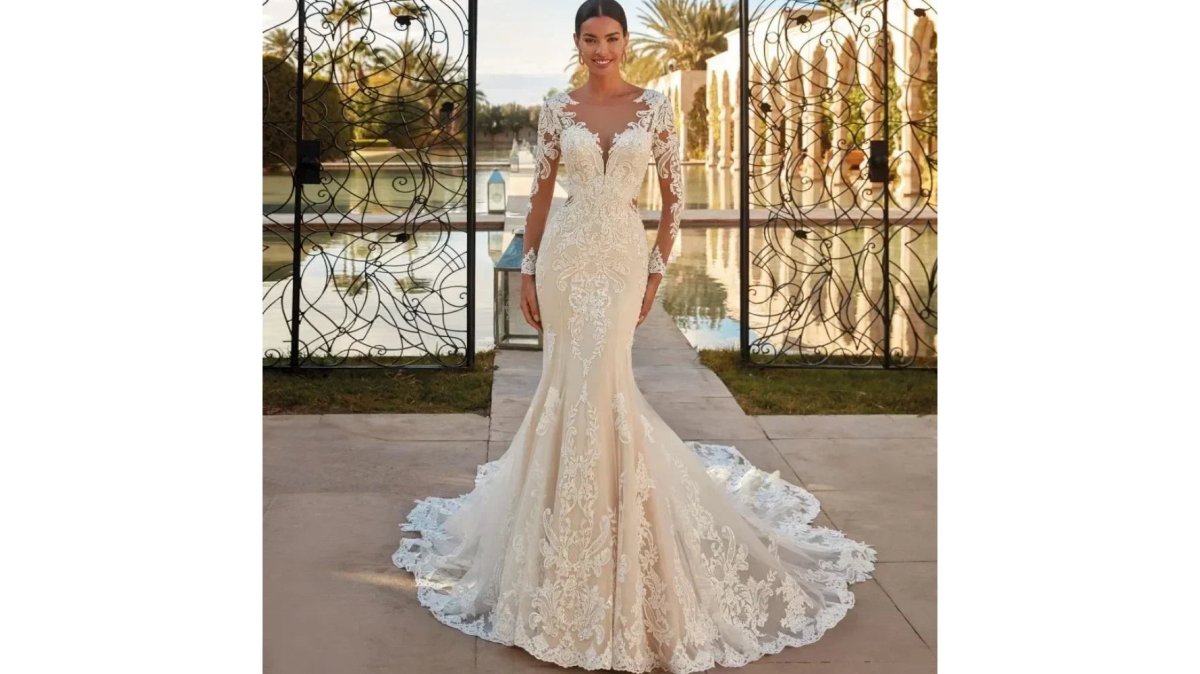
This is where customization changes the math. Made-to-order bridal gowns, like the Boho Mermaid Wedding Dress at $259.99, are designed to offer a more personalized fit.

Hollow-to-floor is the measurement most shoppers haven't taken before. It runs from the hollow at the base of the neck, between the collarbones, straight down to the floor, and it determines where a floor-length hem actually lands. Measure it in the shoes you plan to wear; a half-inch error is the difference between a gown that skims the floor and one that pools.
For made-to-order pieces, measure over the undergarments you'll wear with the garment, keep the tape snug but not tight, and have someone else measure your back and hollow-to-floor, self-measuring those two is where most errors happen.
Before ordering from a new boho label, find one review that mentions the reviewer's height and usual size. That single data point tells you more about fit than a dozen reviews that only say "runs small."
Affordable Boho Clothing Brands: What Budget Shoppers Should Know
Affordable boho clothing brands can deliver real value, but only if you know which corners get cut. Lower prices usually mean thinner fabric, less lining, and standard sizing rather than customization, not automatically bad for layering pieces. The mistake is expecting a budget tunic to perform like a structured mid-tier piece.
A smarter approach: buy fewer, more versatile items and check fabric composition first. One well-made layering piece outperforms three cheap ones over a year. Testing a new label? Start with one accessory or lower-cost item.
Boho Home Decor Ideas for Renters: No-Damage Styling
Boho home decor ideas for renters work best when they rely on texture and layering instead of wall damage. Command strips, leaning artwork, and freestanding shelving build an eclectic look without a single nail hole. The aesthetic translates easily to rentals because it's built on textiles: woven throws, macrame hangings on removable hooks, floor poufs, and layered rugs. Earthy tones and natural materials do the heavy lifting, no repainting or remodeling needed.
Start with one anchor textile, like a large rug or throw, then build outward with smaller accents. That keeps the space cohesive instead of cluttered.
Eclectic Home Decor Styling Tips: Mixing Textures and Eras
Eclectic home decor styling tips come down to one rule: mix deliberately, not randomly. Pair a vintage-inspired piece with something modern, and layer smooth ceramics against rough woven fibers. The goal is contrast that reads as intentional. Three textures per surface is plenty, beyond that, the room reads as messy.
Boho styling succeeds when every piece earns its place. If you can't explain why an item is in the room, it's clutter, not character.
Shipping, Returns, and Online Shopping Safety
Online shopping safety and return policy transparency matter more here than in almost any other category, because fit and fabric are hard to judge from photos. Before ordering from any boho label, confirm three things: the production and shipping timeline, the return window and who pays return shipping, and whether custom or made-to-order items are returnable.
Here's a checklist to run before you check out:
- Confirm the fabric composition is listed on the product page
- Check whether the item is made-to-order or in stock
- Read the return window and note the exact number of days
- Confirm who covers return shipping costs
- Verify the seller has a working contact method, not just a contact form
- Look for customer reviews that mention fit and durability, not just style
Made-to-order and custom-sized garments typically aren't returnable without a documented reason, standard across the category. Not a red flag, but it means measuring carefully first.
The real challenge with similar boho brands isn't finding a pretty print, it's finding pieces that hold up and fit right the first time. JazzySuSu curates vintage-inspired fashion, handpicked jewelry, and lifestyle finds with exactly that in mind, from customizable bridal gowns to everyday layering pieces, plus free shipping on orders over $100. If you want a signature look built to be worn again and again rather than replaced each season, shop the JazzySuSu collection and start with one piece you'll actually keep.
Frequently Asked Questions
What brands are similar to Natural Life for boho clothing and accessories?
Natural Life is known for its free-spirited prints, tunic tops, and whimsical accessories. Similar boho brands include JazzySuSu, which offers vintage-inspired fashion and handpicked jewelry, plus other labels focused on floral prints, earthy tones, and layering pieces. When comparing options, look at fabric composition, sizing accuracy, and return policy transparency rather than just the aesthetic, since these factors determine whether a piece becomes a wardrobe staple or a one-time wear.
Is the boho aesthetic still trending in 2026 for home decor and fashion?
Yes, the boho aesthetic remains relevant in 2026, though it has evolved toward cottagecore and vintage-inspired interpretations. Earthy tones, floral prints, and soft fabrics continue to appear in both clothing and home decor. The shift is toward quality over quantity, with shoppers prioritizing sustainable fashion, garment durability, and versatile layering pieces that work across seasons rather than fast-fashion trends that fade quickly.
What should I look for when comparing bohemian lifestyle brands?
Focus on four factors: fabric composition, fit and sizing accuracy, shipping logistics, and return policy transparency. Check whether materials are listed clearly, whether customer reviews mention sizing consistency, and how the brand handles exchanges. A brand that publishes detailed size charts and offers free shipping over a threshold, like JazzySuSu's $100 minimum, gives you more confidence before committing to an order.
What are the best affordable boho clothing stores for a free-spirited look?
Affordable boho clothing brands typically price dresses between $40 and $80 and kimonos under $50. JazzySuSu's Boho Floral Patchwork Kimono at $41.99 and the Umgee Abstract Print Puff Sleeve Dress at $57.99 fit this range while offering size-inclusive options. Look for pieces made from rayon or cotton blends that hold up to repeated wear, and check whether the brand offers free shipping thresholds to offset delivery costs.
How do I style boho home decor in a rental without damaging walls?
Use removable adhesive hooks for lightweight wall hangings, lean framed art against walls instead of hanging it, and layer textiles like tapestries or throw blankets over furniture. Floor poufs, woven baskets, and potted plants add boho texture without requiring permanent fixtures. Command strips and tension rods work well for curtains and lighting. These eclectic home decor styling tips let you personalize a rental while protecting your security deposit.