
Style Eclectic Home Decor on Budget: 7 Steps
Table of Contents
- Understanding Eclectic Design vs. Cluttered Spaces
- Step 1: Define Your Color Palette and Visual Foundation
- Step 2: Master Mixing Vintage and Modern Decor
- Step 3: Layer Patterns and Textures Strategically
- Where to Find Cheap Eclectic Home Decor
- Eclectic Home Decor Ideas for Renters
- Step 4: Use Lighting and Focal Points to Anchor Your Design
- Common Mistakes That Turn Eclectic Into Chaotic
Last Updated: August 28, 2026
Understanding Eclectic Design vs. Cluttered Spaces
Eclectic design intentionally blends different styles, eras, and textures into a cohesive, visually interesting space. The key distinction between true eclectic home decor and chaos comes down to curation and restraint. Real eclectic design has a throughline, a unifying element like a consistent color palette, shared material, or cohesive aesthetic that ties disparate pieces together.
Many confuse eclectic with maximalism or "more is more." Your brain craves visual interest but also needs anchors. Without them, your space feels chaotic instead of curated. A room with five mismatched chairs, each chosen deliberately and placed with purpose, reads as sophisticated. Five random chairs reads as indecisive.
Step 1: Define Your Color Palette and Visual Foundation
Before you buy anything, establish your color foundation. This is the non-negotiable first step for styling eclectic home decor on budget successfully.
Your palette doesn't need to be complicated. The most sophisticated eclectic spaces often use just three to four colors as anchors: one dominant color (40% of your space), one secondary color (30%), one accent color (20%), and neutrals to breathe (10%). Constraint breeds creativity. When you know you're working with, say, warm terracotta, cream, and forest green, thrifting becomes strategic.
Neutrals are your best friend. Warm whites, soft grays, natural wood tones, and blacks act as visual rest stops. They let your statement pieces breathe and prevent saturation. Consider your lighting too, a terracotta wall that glows warm in afternoon sun might feel muddy in morning light. Visit thrift stores at different times of day if possible, or take potential pieces home to test them under your actual lighting.
Step 2: Master Mixing Vintage and Modern Decor
The real skill in eclectic design is pairing vintage and modern pieces so they enhance rather than compete. Start with proportion and scale. A massive mid-century modern sofa needs breathing room; pair it with smaller vintage accent pieces. Conversely, ground delicate vintage pieces with one substantial modern element.

Material contrast creates sophistication. Pairing wood with metal, ceramic with glass, leather with linen creates tactile interest. Vintage pieces often have authentic materials that modern budget furniture mimics. By mixing them intentionally, you elevate the whole composition.
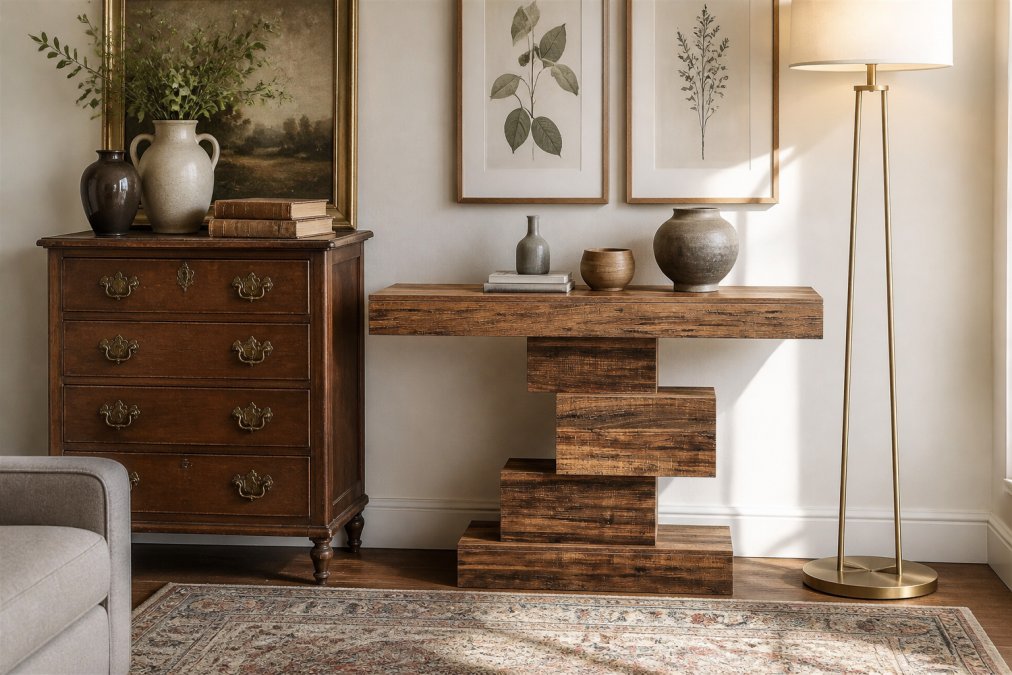
Create clusters rather than scattering vintage pieces evenly. One corner might be dominated by a thrifted wooden dresser, vintage lamps, and old prints. Another leans modern. This creates visual zones that feel intentional.
Thrifted items are often cheaper than new furniture. The investment comes in time spent hunting and occasional refinishing, but the final cost is usually lower than buying everything new.
Step 3: Layer Patterns and Textures Strategically
Layering makes eclectic spaces feel rich and intentional. Patterns need hierarchy: one dominant pattern (a large-scale geometric rug), one secondary pattern (throw pillows), and smaller accent patterns (a framed print). Contrast in scale prevents pattern explosion. If your dominant pattern is large geometric shapes, your secondary pattern should be smaller or more organic.
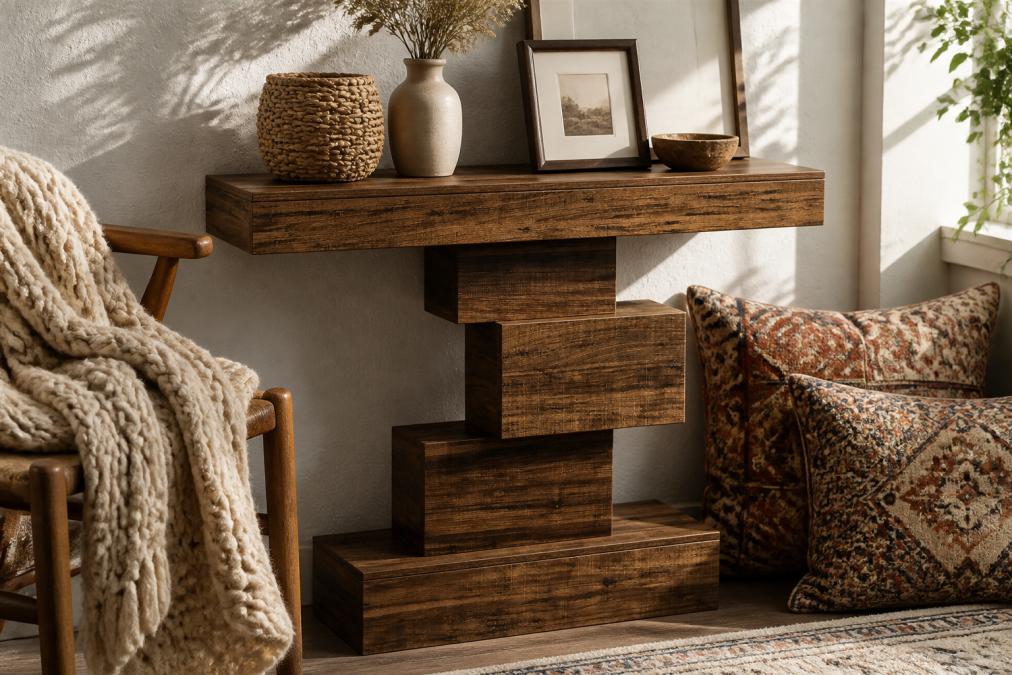
Texture matters as much as pattern. Smooth surfaces (glass, polished wood) next to rough surfaces (raw linen, jute) create depth. Soft textures (velvet, wool) paired with hard textures (metal, stone, leather) make a space feel tactile. Start with one textured anchor piece and build other textures around it.
Where to Find Cheap Eclectic Home Decor
Budget-conscious decorating isn't about buying the cheapest items, it's about finding quality pieces at secondhand prices.
Thrifting and Vintage Sourcing
Successful thrifting requires strategy. Approach it with your color palette and a specific list. Know what you're hunting for: a side table in wood tones, brass candleholders, textiles in your chosen colors. This focus means you'll find what you need instead of impulse-buying.
Check wood furniture for solid construction and real wood versus veneer. For upholstered pieces, inspect seams and fabric for damage. Many thrifted pieces are barely used and outlast new furniture.
Independent shops and estate sales offer higher-quality vintage pieces than chain thrift stores. Estate sales especially provide quality because they're from individual homes.
Repurposing Existing Furniture and DIY Projects
The cheapest piece is the one you already own. Audit what you have. Can that old dresser be refinished? Can mismatched chairs be reupholstered in a cohesive fabric?
DIY refinishing is accessible. Painting wooden furniture requires only sandpaper, primer, paint, and a brush. A $20 thrifted chair becomes a $35 statement piece after a fresh coat (peer-reviewed research). Reupholstering a chair seat costs under $50 in fabric and takes an afternoon. YouTube tutorials are genuinely good for this.
Upcycling is the sustainable angle. Old picture frames become gallery walls. Vintage suitcases stack as side tables. Mason jars become candle holders.
Eclectic Home Decor Ideas for Renters
Renting creates constraints that actually push you toward more creative solutions. Removable solutions are your foundation: adhesive wall hooks, damage-free picture hanging strips, and freestanding shelving units. A gallery wall becomes possible without drilling using leaning frames and adhesive-backed hooks.
Furniture becomes your wall color. Use a large area rug, upholstered sofa, or gallery of textiles to establish your color palette. Layering rugs creates visual interest and defines spaces without permanent changes.
Temporary wallpaper and peel-and-stick solutions have improved significantly. Use them strategically on one accent wall or in small spaces rather than everywhere.
The real advantage for renters: you can change things frequently. Gallery walls can be rearranged seasonally. Textiles can be swapped. This flexibility encourages more experimental decorating because there's less permanence. Thoughtful, temporary decorating is often cheaper than permanent solutions since you're not committing to expensive built-ins.
Step 4: Use Lighting and Focal Points to Anchor Your Design
Lighting transforms a styled space from nice to stunning. Layered lighting is the strategy: ambient lighting (overhead), task lighting (reading lamps), and accent lighting (spotlights on artwork, candles). In eclectic spaces, these lighting sources themselves become decor, a vintage brass floor lamp, Edison bulbs, mismatched table lamps contribute to your aesthetic while serving function.

Warm-toned bulbs (2700K or lower) feel inviting and work better with eclectic aesthetics (energy.gov). Cool-toned bulbs feel clinical and work against the warmth eclectic design aims for.
Focal points anchor eclectic spaces and prevent scattered feeling. A focal point is what your eye lands on first, a gallery wall, statement furniture, fireplace, or window. Everything else should support it, not compete. Lighting your focal point is crucial; a small spotlight makes it undeniably central.
Common Mistakes That Turn Eclectic Into Chaotic
The first mistake is lack of constraint. Too many colors, patterns, and styles competing at once. The color palette step is critical, it's the single biggest factor separating "I love this room" from "this room is exhausting."
The second mistake is scale imbalance. Fill a room with only small pieces and it feels cluttered. Too many large pieces feels overwhelming. Use intentional variety: some statement pieces, some medium pieces, some small accents.
The third mistake is ignoring negative space. Eclectic doesn't mean full. Empty wall space, open shelving, and clear floor create breathing room that makes pieces stand out.
The fourth mistake is mismatched quality levels. Thrifted vintage pieces often have better bones than new budget furniture. Invest in finding quality secondhand pieces rather than buying new cheap items.
The fifth mistake is ignoring the room's architecture and lighting. A space with poor natural light needs different color choices than a bright room. Small rooms need different scale choices than large rooms.
The sixth mistake is treating eclectic as an excuse for indecision. Eclectic is intentional. Every piece should have a reason. If you're keeping something "just because it was cheap," that's clutter, not curation.
Creating eclectic home decor on a budget is entirely achievable when you approach it strategically. Start with a clear vision, color palette, and style direction. From there, sourcing becomes focused rather than random, and your budget stretches further because you're not buying things you'll regret.
At JazzySuSu, our curated collection of vintage-inspired home decor, handpicked jewelry, and statement pieces are specifically selected to help you create spaces that feel intentional rather than chaotic. Whether you're sourcing from thrift stores, repurposing what you own, or adding carefully chosen pieces, the approach is the same: choose with purpose, layer with intention, and let your space reflect who you actually are. Shop now to discover pieces that elevate your eclectic aesthetic.
Frequently Asked Questions
What's the difference between eclectic design and cluttered decor?
Eclectic design is intentional and curated, every piece serves a purpose and connects to your overall aesthetic through color, scale, or material. Cluttered spaces lack visual flow and proportion. The key is choosing statement pieces that speak to each other, even if they come from different eras or styles. Think of it as a composed conversation between your furniture and decor, not random accumulation.
How do I balance high and low price points when styling eclectic home decor on a budget?
Invest in anchor pieces like a quality sofa or console table, like the Modern Farmhouse 42-inch Console Table ($152.25), that will last years. Then layer in affordable vintage finds, thrifted textiles, and DIY projects around them. This creates visual interest without overspending. One well-chosen focal point gives your room structure; budget pieces fill in the gaps with personality and texture.
Where's the best place to find affordable vintage-inspired decor for renters?
Thrift stores, Facebook Marketplace, estate sales, and online vintage shops offer pieces at a fraction of retail cost. For renters specifically, prioritize removable items: throw pillows, wall art, rugs, and smaller furniture. Avoid permanent changes. Curated retailers like JazzySuSu also offer handpicked vintage-inspired pieces designed to last, with free shipping on orders over $100, making it easier to build your aesthetic without committing to expensive, permanent furniture.
How do I prevent my eclectic space from looking too busy or overwhelming?
Use the 70/30 rule: keep 70% of your space calm and cohesive, and reserve 30% for statement pieces and visual interest. Stick to a consistent color palette even when mixing eras and styles. Ensure pieces have breathing room, don't overcrowd shelves or walls. Group similar items together (books by color, ceramics by style) to create intentional clusters rather than scattered chaos. Balance bold patterns with solid, neutral textiles.
This article was written using GrandRanker