
Styling Vintage Dresses for Modern Occasions
Table of Contents
- Why Vintage Dresses Work for 2026 Occasions
- Vintage Dress Outfit Ideas for Every Occasion
- How to Mix Vintage and Modern Fashion Without Looking Costume-Like
- Accessories for Vintage Dresses That Modernize the Look
- Fit and Tailoring: Getting the Silhouette Right
- Seasonal Styling: Adapting Vintage Dresses for Weather
- Caring for Vintage and Vintage-Inspired Dresses
- Conclusion: Building a Repeatable Vintage Styling Routine
- Frequently Asked Questions
Last Updated: October 13, 2026
Why Vintage Dresses Work for 2026 Occasions
A vintage dress is made in a past era or designed to echo one, and it works for modern occasions because the right styling makes old shapes feel current.

The trick is not the dress itself. It is what you put around it.
A 1950s dress with a denim jacket reads casual. The same dress with heels and pearls reads formal. One garment, two completely different outfits.
This guide covers styling vintage dresses for work, weddings, weekends, and cold weather, plus fit, care, and how to avoid the costume trap.
Vintage Dress Outfit Ideas for Every Occasion
The best vintage dress outfit ideas start with one question: where are you going? Below are complete formulas, silhouette, layer, shoe, accessory, so you can build the look without guessing.

Work and Office-Ready Formulas
Keep it structured and simple for the office. A vintage dress with a defined waistline works best with a modern blazer in black, navy, or camel.
Formula: structured waist + neutral blazer + low heel + minimal jewelry
- Dress: a 1950s-style shirtwaist or 1940s-style A-line in a solid or small-scale print. Both have a defined waist, which reads polished rather than fussy.
- Layer: a single-breasted blazer that hits at the hip. A cropped blazer fights a full skirt; a hip-length blazer balances it.
- Shoes: low block heels, loafers, or a sleek flat.
If your dress has a busy print, keep the blazer pattern-free. Two patterns in one outfit is the fastest way to look dated rather than deliberate.
Wedding Guest and Party Looks
For weddings and parties, let the dress lead. A full skirt with a fitted top half needs little else, add a delicate sweater if the venue is chilly.
Formula: statement dress + minimal layer + dressy shoe + one focal accessory
- Dress: a 1950s full-skirt silhouette or a 1920s-inspired drop-waist in a romantic print. Both photograph and move well on a dance floor.
- Layer: a fine-knit wrap or cropped cardigan over the shoulders. Chunky knits flatten the silhouette.
- Shoes: strappy heels for a formal venue, dressy ankle boots for a rustic one. Match the shoe formality to the venue, not the dress.
Weekend and Everyday Wear
Weekends call for comfort. Layer a white tee under a sleeveless vintage dress, or knot an oversized top at the waist, and add chunky sneakers.
Formula: casual dress + knit layer + sneaker + crossbody bag
- Dress: a cotton midi or simple shift. Cotton breathes and holds up to repeated wear better than rayon or acetate.
- Layer: a white tee under a sleeveless dress, or a cropped sweatshirt over the top. Knotting an oversized top at the waist creates a waistline without a belt.
- Shoes: chunky sneakers, canvas low-tops, or flat sandals.
Dinner and Date-Night Looks
Dinner sits between work and a party: dressier than the office, less formal than a wedding.
Formula: midi dress + sleek layer + heeled boot or pump + small bag
- Dress: a midi with a defined waist. A 1930s-style bias cut in a solid color reads especially modern at night.
- Layer: a leather jacket or fitted blazer, structure without volume.
- Shoes: heeled ankle boots or a pointed pump. A pointed toe lengthens the leg under a midi hem.
Casual Events and Errands
The goal is to look put-together without looking like you tried. A vintage dress with a denim jacket and flat shoes does that in one step.
Formula: easy dress + denim jacket + flat shoe + tote
- Dress: a simple cotton or linen midi in a small print or solid.
- Layer: a classic denim jacket, the single most reliable modernizer for a vintage dress.
- Shoes: flat sandals, ballet flats, or clean white sneakers.
How to Mix Vintage and Modern Fashion Without Looking Costume-Like
Mixing vintage and modern fashion works when you limit vintage pieces to one or two per outfit. Going full retro, head to toe in one era, tips into costume.
Here is the rule we give shoppers: one vintage statement, everything else modern.
- Vintage dress plus modern sneakers equals balanced
- Vintage dress plus vintage hat, gloves, and bag equals costume
- Modern jeans plus one vintage-inspired top equals balanced
The Vogue guide to modern vintage styling makes a similar point: contrast is what sells the look.
Accessories for Vintage Dresses That Modernize the Look
Accessories for vintage dresses do the heavy lifting. A single modern accessory can pull an entire outfit forward.
Try these combinations:
Painted Floral Vintage Dress →
- A layered gold necklace over a high neckline
- A structured modern handbag instead of a retro clasp bag
- Simple hoop earrings instead of period jewelry
- A thin leather belt to break up a busy print
- Modern sunglasses to update a full-skirt silhouette
For a high-neckline dress, a layered chain adds detail without clutter. Our Vintage Charm Triple Layered Necklace sits at 13, 15, and 18 inches, filling the neckline without hiding the print. Prefer something lighter? The Vintage Butterfly Solo Toggle Necklace works solo or layered.

| Accessory | Modern Choice | Retro Choice (Avoid) |
|---|---|---|
| Necklace | Layered gold chains | Pearl choker |
| Bag | Structured leather tote | Clasp frame bag |
| Shoes | Ankle boots or sneakers | Kitten heels with bows |
| Outerwear | Denim jacket or blazer | Cropped cardigan set |
Fit and Tailoring: Getting the Silhouette Right
Fit decides whether a vintage dress looks intentional or borrowed. Vintage sizing runs differently from modern sizing, so always check the size chart.
A good tailor can fix most fit issues for a small fee:
- Taking in the waistline
- Shortening a maxi hemline
- Adjusting shoulder seams
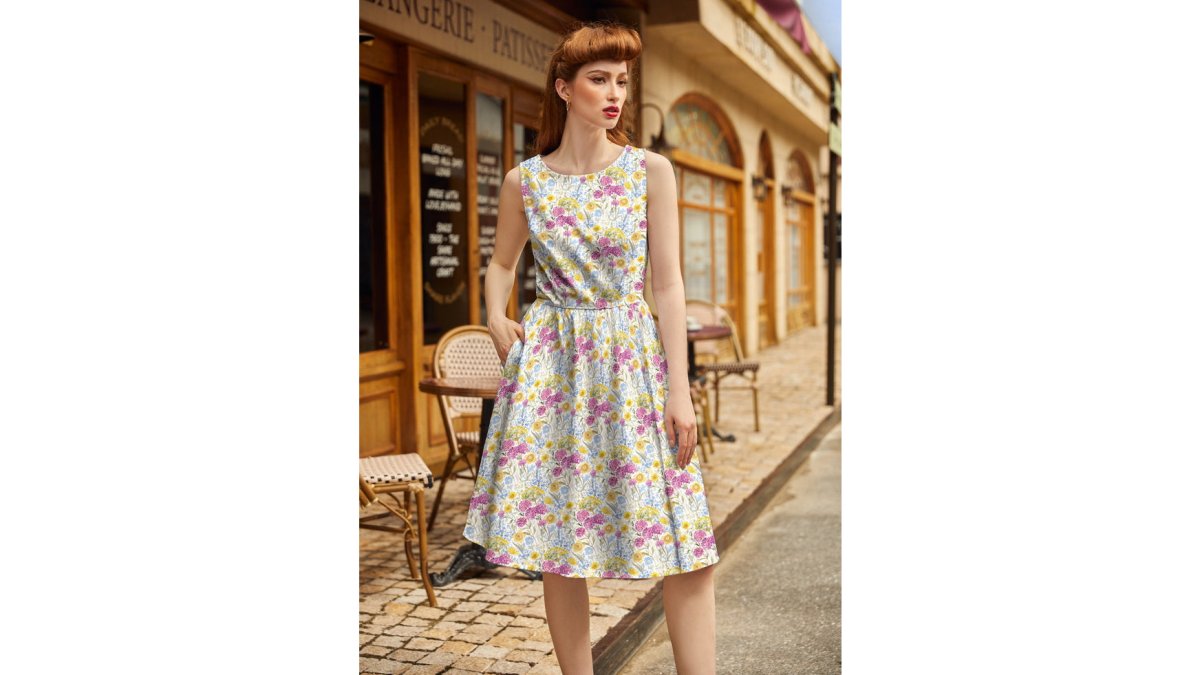
Our Painted Floral Vintage Dress runs true to size in XS through 4X, with a full skirt, hidden side pockets, and a back zipper. The Wildflower Vintage Dress uses the same cut in a different print. Both are 100% cotton and made in the USA.
Seasonal Styling: Adapting Vintage Dresses for Weather
Weather changes everything. The same dress can work in July and January with the right layers. Think in three layers, base, mid, outer, and match fabric to season.
Cold Weather: Layering Without Bulk
For cold weather, add:
- Tights or leggings under the skirt
- A delicate sweater or turtleneck underneath
- Ankle boots instead of sandals
How to layer without bulk:
- Base layer: a thin merino or cotton turtleneck under the dress. Wool blends insulate without visible thickness.
- Mid layer: a fine-knit cardigan or cropped sweater over the dress. Avoid chunky knits, they flatten a full skirt and hide the waistline.
- Outer layer: a long wool coat or tailored overcoat hitting below the knee. A short puffer breaks the line of a midi or maxi dress.
Warm Weather: Keeping It Light
For warm weather, keep it light:
- Sheer shirt over the shoulders for sun cover
- Sandals or canvas sneakers
- A straw hat for shade
How to stay cool without losing the look:
- Fabric: cotton, linen, and rayon breathe; polyester and acetate trap heat. Check the fiber content first.
- Coverage: a sheer button-down worn open over the dress gives sun protection without adding heat. A linen shirt works the same way.
- Feet: flat sandals, espadrilles, or canvas sneakers. A closed leather shoe in July reads heavy even if the dress is light.
Transitional Seasons: Spring and Fall
Spring and fall are where vintage dresses earn their keep. The temperature swings, so the outfit has to swing with it.
- Spring: a blazer over the dress in the morning, removed by afternoon. A trench coat is the classic outer layer for a midi dress.
- Fall: a leather jacket, a denim jacket, or a long cardigan. Add ankle boots and a scarf, and the same summer dress becomes a fall outfit.
- Rain: a trench coat and a closed shoe. A full skirt in the rain will soak at the hem; a midi or a shorter hem handles wet weather better.
Matching Fabric to Season
| Season | Best Dress Fabrics | Layer to Add | Footwear |
|---|---|---|---|
| Summer | Cotton, linen, rayon | Sheer shirt, straw hat | Sandals, canvas sneakers |
| Spring | Cotton, cotton blends | Blazer, trench coat | Loafers, low heels |
| Fall | Wool blends, heavier cotton | Leather or denim jacket, long cardigan | Ankle boots |
| Winter | Wool, wool blends, lined cotton | Turtleneck, long wool coat | Knee-high boots, tights |
Layering is the key skill: a jumper in fall, a blazer in spring, a sheer shirt in summer all extend one garment across seasons.
Caring for Vintage and Vintage-Inspired Dresses
Care keeps vintage pieces wearable for years. Most cotton vintage dresses need gentle handling.
- Wash in cold water on a gentle cycle
- Turn the dress inside out before washing
- Hang to dry instead of using a dryer
For true vintage pieces, hand washing is safer. Check seams and buttons before each wash, and repair small tears early.
The FTC guidance on textile care labels explains what care symbols mean, which helps when a vintage label is faded or missing.
Conclusion: Building a Repeatable Vintage Styling Routine
The challenge with vintage is not finding pieces. It is making them work again and again without repeating the same look.
Start with one base dress, then rotate layers, shoes, and accessories: a blazer for work, a delicate sweater for evenings, sneakers for weekends.
At JazzySuSu, we curate vintage-inspired fashion, handpicked jewelry, and lifestyle pieces built to be worn repeatedly.
Shop now and build a wardrobe that lasts beyond one season.
Frequently Asked Questions
How do you make a vintage dress look less costume-like?
The key is balancing one vintage element with modern pieces. Pair a vintage dress with contemporary footwear like chunky sneakers or ankle boots, add a modern blazer or denim jacket, and keep accessories minimal. Avoid head-to-toe retro styling. Mixing eras and proportions signals personal style rather than costume. For example, a 1950s-inspired dress with a high neckline and full skirt works well with a sleek leather jacket and simple gold jewelry.
What shoes and accessories go with a vintage dress?
Ankle boots, chunky sneakers, and simple ballet flats all work with vintage dresses for modern occasions. For accessories, layered gold necklaces, delicate charm pendants, and structured handbags add polish without overwhelming the dress. A blazer or denim jacket provides structure. The goal is to contrast the dress's romantic or retro details with clean, contemporary pieces. Avoid matching every accessory to the era of the dress, as that creates a themed look.
How can you style a vintage dress for work or a casual day out?
For work, layer a vintage dress under a tailored blazer and pair with ankle boots or loafers. Choose dresses with midi hemlines and structured fabrics like cotton. For casual days, add a white tee layered over or under the dress, swap in chunky sneakers, and finish with a denim jacket. The Painted Floral Vintage Dress in 100% cotton with a high neckline and full skirt transitions easily between both settings when you change the outer layer and footwear.
How do you dress up a vintage dress for a wedding or party?
Start with a dress that has a flattering silhouette, like a 1950s-inspired style with a fitted waist and full skirt. Add a delicate layered necklace such as the Vintage Charm Triple Layered Necklace for a polished finish. Swap everyday shoes for heeled ankle boots or strappy sandals. A structured clutch and minimal makeup keep the look modern. Avoid piling on vintage accessories, as one or two well-chosen pieces are enough to elevate the outfit.