
How to Identify High Quality Vintage Clothing
Table of Contents
- Examine Fabric Composition and Natural Fibers
- How to Date Vintage Clothing by Zipper and Hardware
- Vintage Clothing Label Identification Guide
- Analyze Construction and Stitching Techniques
- Signs of High Quality Vintage Garments
- Spot Reproductions and Counterfeit Vintage
- Care and Preservation for Authentic Pieces
Last Updated: August 14, 2026
Knowing how to identify high quality vintage clothing separates savvy thrifters from those who end up with pieces that fall apart after a few wears. The difference between a garment that lasts decades and one that's a reproduction or low-quality knockoff often comes down to specific technical markers: fiber content, construction methods, hardware details, and manufacturing codes.
At JazzySuSu, we've built our curated collection by mastering these authentication techniques. Whether you're hunting for festival wear, bridal pieces, or everyday essentials that stand the test of time, understanding how to evaluate vintage quality transforms your shopping experience.
Examine Fabric Composition and Natural Fibers
The foundation of quality vintage clothing starts with what it's made from. Natural fibers like cotton, wool, linen, and silk age beautifully and develop character over time, a quality known as patina. Pure cotton from the 1960s and earlier tends to be heavier and more durable than modern cotton. Wool garments from mid-century are frequently softer and more resilient than contemporary versions.
Check the fiber content label carefully. Garments from the 1970s onward typically have permanent care labels listing fiber percentages. Pieces from earlier eras may have hangtags or woven labels without detailed fiber information; in those cases, rely on feel and visual inspection. Genuine vintage wool should feel substantial without being scratchy. Quality silk has a subtle sheen and drapes smoothly.
The real marker of quality is the weight and weave density. Run your hand across the fabric. Does it feel sturdy? Does the weave feel tight and intentional? Authentic vintage construction prioritizes durability; manufacturers expected garments to be worn repeatedly for years, not seasons.
How to Date Vintage Clothing by Zipper and Hardware
Zippers and hardware offer one of the most reliable methods for dating vintage pieces. Early zippers before the 1930s had exposed metal teeth and were fragile. By the 1930s-1940s, coil zippers became standard. Metal zippers with aluminum or brass teeth dominated the 1950s-1970s. Nylon coil zippers became prevalent in the 1980s onward.
Examine the zipper closely. YKK zippers, still the industry standard, began appearing on garments in the 1960s. Earlier zippers often have manufacturer marks like Talon or Scovill. Reproduction vintage pieces often use modern YKK zippers, which immediately signals they're not authentic period garments.
Buttons offer similar clues. Vintage buttons from natural materials, bone, horn, shell, wood, were common before the 1960s. Plastic buttons became standard afterward. Mother-of-pearl buttons with a specific sheen and slight translucence suggest pre-1950s construction. Chunky plastic buttons point to 1970s-1980s manufacturing.
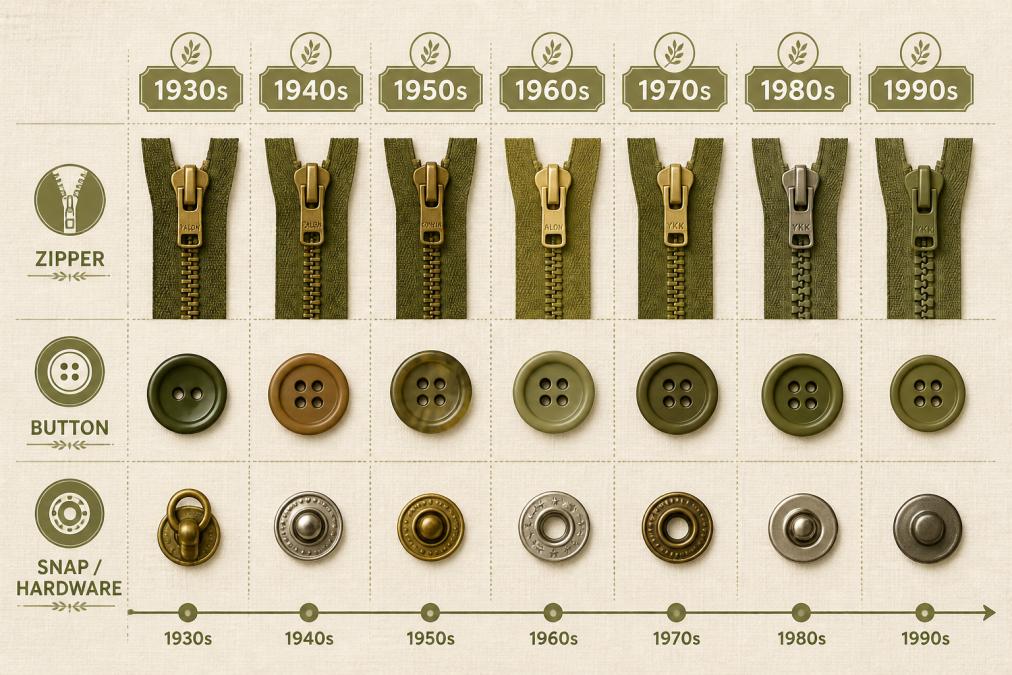
Metal snaps and hooks also provide dating clues. Older snaps tend to be larger and heavier. Modern reproductions often use smaller, lighter hardware that looks fragile compared to original vintage pieces. Quality vintage construction means hardware is firmly attached.
Vintage Clothing Label Identification Guide
Labels are your direct line to manufacturing information. RN numbers, registration numbers assigned by the Federal Trade Commission, correspond to specific manufacturers or companies. These numbers can be cross-referenced to identify exactly who made the garment and when they were active.
Research the label format itself. Early labels (pre-1940s) were often woven directly into the garment. By the 1940s-1950s, sewn-in labels became standard. Printed labels on thin cotton became common in the 1960s. Glossy polyester labels appeared in the 1970s. Reproduction vintage often uses modern label printing techniques that look too clean and uniform compared to original labels.
Look for union labels. The "Union Made" label or ILGWU (International Ladies' Garment Workers' Union) mark indicates the garment was manufactured by unionized workers, typically in the United States. Pieces with union labels from the 1950s-1970s generally indicate higher-quality construction.
Check the care instructions format. Pre-1971 garments rarely have detailed care labels. The FTC mandated permanent care labels starting in 1971. If a garment claims to be from the 1960s but has a modern care label format, it's either been altered or is a reproduction.
Analyze Construction and Stitching Techniques
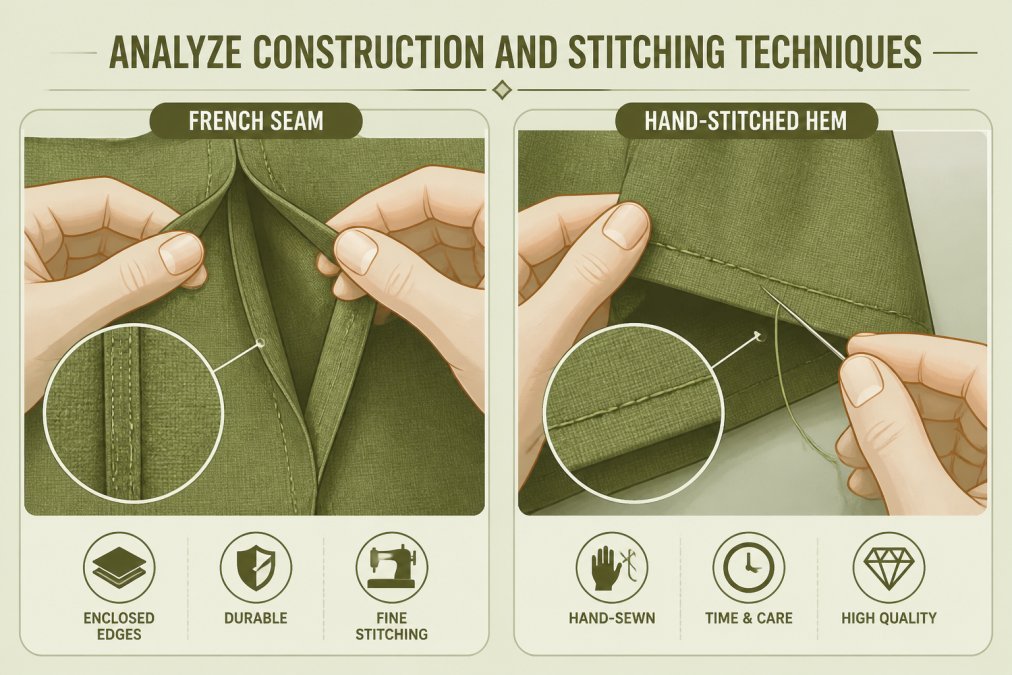
How a garment is sewn reveals whether it was made to last or cut from cheap patterns. French seams are a hallmark of quality vintage construction. In a French seam, the fabric edges are enclosed within the seam itself, creating a finished seam on both sides. Turn the garment inside out. If you see clean, finished seams with no raw fabric edges, you're looking at quality construction.
Hand-stitched hems are another quality indicator. Run your fingers along the hem. Hand-stitched hems show slight variation in stitch length and spacing; this imperfection is actually a sign of authenticity and quality. The stitches are often slightly larger than modern machine stitching.
Single-stitch construction versus double-stitch matters significantly. Single-stitch garments, common before the 1970s, have one line of stitching holding seams together. Single-stitch pieces are generally older and, when well-maintained, can be more durable.
Check the seam allowances. Generous seam allowances indicate quality construction. Vintage garments often have seam allowances of half an inch or more, allowing for alterations or repairs. Modern pieces often have narrow quarter-inch seam allowances to save fabric.
Look at how the collar, cuffs, and waistbands are attached. Quality vintage construction uses multiple rows of stitching to reinforce stress areas. The facing should be sewn down with several passes of thread, creating a stable, professional finish.
Signs of High Quality Vintage Garments
Selvedge edges, the finished edges of fabric that run along the sides of the bolt, are a mark of quality. If you see a selvedge edge on a vintage piece, it means the manufacturer used the entire width of the fabric bolt without cutting off the finished edge.
Weight and drape tell a story. High-quality vintage garments feel substantial in your hands. Quality fabrics from the 1950s-1970s have a specific weight and body that modern lightweight fabrics don't replicate.
Wear patterns reveal authenticity. Genuine vintage pieces show realistic wear in specific areas: the underarm seams, the inside of collars, the hem from repeated wearing. Reproduction pieces either show no wear or show artificial, uniform wear that looks applied rather than earned.
Check for deadstock, unworn vintage pieces still in original condition with tags intact. Deadstock pieces prove the garment's age because they've been stored, not worn. The fabric may be slightly yellowed or have storage creases, but the construction details are pristine.
The tailoring details matter. Quality vintage garments often have subtle touches that modern pieces skip: reinforced pocket bottoms, extra stitching at stress points, darts that are carefully pressed and sewn for a smooth fit.
Spot Reproductions and Counterfeit Vintage
Reproductions and counterfeits have become increasingly sophisticated. However, certain inconsistencies still reveal when a piece is modern, not authentically vintage.
Inconsistent aging is a primary red flag. Authentic vintage shows realistic wear patterns based on how the garment would actually be used. Reproductions often show uniform aging across the entire garment, as if the whole piece was treated with the same aging process.
Label inconsistencies reveal reproductions immediately. Modern reproductions sometimes use labels that reference eras they're claiming to represent, but the label format is wrong. The label stitching should match the garment's era: hand-stitched labels on 1940s pieces, machine-sewn labels on 1960s pieces onward.
Check for anachronistic details. A garment claiming to be from 1950s cannot have nylon zippers if the brand didn't use them until the 1970s. Cross-reference the era with the materials and hardware. If anything seems out of place, question the authenticity.
Thread color and aging matter. Original vintage stitching often shows discoloration or slight fading from age and washing. Modern reproductions use bright, uniform thread that looks fresh.
Care and Preservation for Authentic Pieces
Once you've identified a high-quality vintage piece, proper care ensures it lasts for decades. Storage is critical. Keep vintage pieces in a cool, dry environment away from direct sunlight. Use acid-free tissue paper for storage, not plastic, which traps moisture. Hang delicate pieces on padded hangers rather than wire hangers.
Hand-wash delicate vintage pieces in cool water with gentle detergent specifically formulated for delicate fabrics. Avoid modern laundry detergents, which can be too harsh for aged fibers. Never use bleach.
Mending extends life. Small tears, loose seams, or separated hems can be repaired by a skilled tailor. Address these issues early before they worsen. Store pieces with cedar blocks, lavender sachets, or specialized wool protectant products to prevent pest damage.
Handle with intention. Wear your vintage pieces thoughtfully. Avoid excessive friction, which pills fabrics. Treat stains immediately with cool water and gentle blotting rather than rubbing.
Identifying high-quality vintage clothing transforms your relationship with fashion. When you understand the technical markers, fiber content, construction methods, hardware details, and manufacturing codes, you move beyond impulse buying into intentional curation. By applying these authentication techniques yourself, you'll develop the eye to spot truly exceptional pieces that reward you with longevity, character, and genuine style that can't be manufactured new.
Frequently Asked Questions
How do you know if vintage clothes are actually high quality and will last?
High quality vintage garments show superior construction through French seams, hand-stitched hems, and dense stitching patterns that modern fast fashion rarely uses. Check fabric content for natural fibers like wool, silk, linen, or cotton rather than synthetic materials. Examine the weight and drape of the fabric, quality pieces feel substantial. Look for minimal wear patterns, intact hardware, and original care instructions. Pieces from the 1950s-1980s built by union-made manufacturers typically outlast contemporary clothing by years.
What's the difference between vintage and retro clothing?
Vintage clothing is an authentic garment at least 20 years old, while retro refers to new pieces designed to mimic a vintage aesthetic. True vintage items carry era-specific design details, period-appropriate labels, and manufacturing codes that reflect their original production date. Retro reproductions may copy the look but lack the authentic construction techniques, fabric quality, and provenance of genuine vintage pieces. Learning to identify RN numbers and label history helps distinguish authentic vintage from modern reproductions.
Can you use an app to identify vintage clothing?
Digital authentication tools exist but work best as supplementary resources rather than definitive identifiers. Image recognition apps can help match styles or suggest era ranges, but they cannot verify fabric composition, stitching quality, or label authenticity through photos alone. The most reliable approach combines digital tools with hands-on inspection: photograph labels and hardware, then cross-reference manufacturing dates and RN numbers with textile databases. In-person examination remains essential for confirming authentic vintage.
What makes high quality vintage pieces worth the investment?
Quality vintage garments represent better value than fast fashion because they're built to last decades with proper care. The superior fabric composition, construction techniques like French seams and single-stitch methods, and timeless design mean you'll wear them repeatedly without degradation. Authentic vintage pieces from established brands carry provenance and collector appeal. When you invest in identifying genuinely high quality pieces rather than trendy reproductions, you're purchasing durability, uniqueness, and sustainable fashion that won't end up in a landfill after a season.
This article was written using GrandRanker