
Is Handmade Artisan Jewelry Worth the Price?
Table of Contents
- The Real Cost of Handmade Artisan Jewelry
- Handmade vs Mass Produced Jewelry Comparison
- How to Identify Quality Handmade Jewelry
- Cost-Per-Wear: The Math That Changes Everything
- Where to Buy Unique Handmade Statement Jewelry
- Resale Value, Environmental Impact, and Repairability
- The Verdict: When Handmade Artisan Jewelry Is Worth It
- Frequently Asked Questions
Last Updated: September 16, 2026
The Real Cost of Handmade Artisan Jewelry
Is handmade artisan jewelry worth the price? For most buyers, the answer depends on whether you're paying for materials and skill, or for a label. This guide from JazzySuSu breaks down where your money actually goes, so you can judge for yourself.
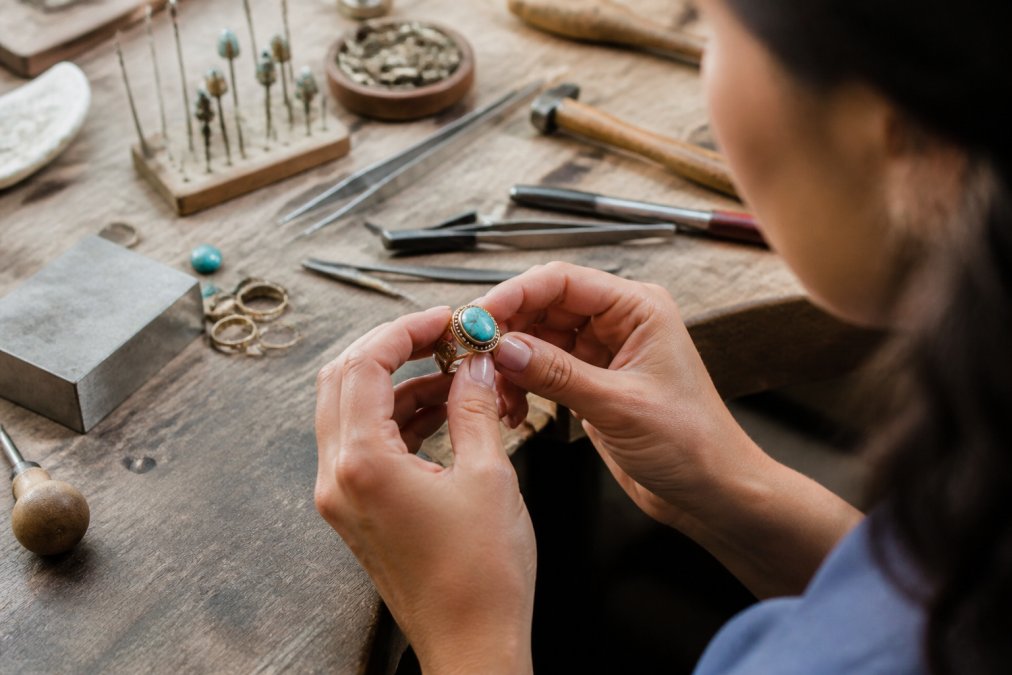
Handmade artisan jewelry is jewelry fabricated by an individual maker or small studio, where the piece is cut, set, and finished by hand rather than stamped out on a production line. That distinction drives the price. A mass-produced ring can be molded by the thousand; a hand-finished piece carries the maker's time in every setting.
Below, we'll show you exactly how to read a price tag, spot real craftsmanship, and calculate whether a piece earns its cost over years of wear.
Handmade vs Mass Produced Jewelry Comparison
The core difference is repetition. Mass-produced jewelry is cast from a master mold and assembled on a line, which keeps costs low but limits variation. Handmade artisan jewelry is built piece by piece, so no two items are identical.
That shows up in three places: material grade, construction method, and finishing time.
| Factor | Handmade Artisan | Mass Produced |
|---|---|---|
| Stone selection | Individually matched | Batch sorted |
| Metal work | Hand-set, hand-finished | Cast and machine-polished |
| Design | One-of-a-kind or small-batch | Repeated season to season |
| Repair potential | Often repairable by maker | Frequently replaced, not fixed |
Durability and Longevity
Durability comes down to how the stone is held and how the metal is finished. Hand-set stones are seated to the individual stone's shape, which reduces the wobble that leads to lost stones. Hand-finishing also removes the sharp edges and thin plating that wear through first on cheaper pieces.
Jewelry longevity is not about hardness alone. A well-made piece with a thicker setting and a solid closure will outlast a lighter piece with a prettier finish, every time.
Originality and Design Value
Originality is the hardest thing to price and the easiest to feel. A small-batch design means you are unlikely to see your piece on three other people at the same event. That matters for statement pieces, bridal accessories, and festival wear, where the whole point is that the piece reads as yours.
What most guides miss is that originality also protects resale. A design that was never mass-replicated keeps a recognizable identity, which is exactly what a future buyer is looking for.
How to Identify Quality Handmade Jewelry
Quality handmade jewelry shows three things: honest materials, clean settings, and finishing marks you can see up close. If you can't inspect it in person, ask for close-up photos of the setting and the clasp.
Check the Materials and Hallmarking
Metal purity and stone quality decide most of the value. Look for a stamp or hallmark indicating the metal content, and ask whether stones are genuine or synthetic. Genuine stones have natural variation: slight color shifts, veining, and inclusions that a factory-perfect piece won't have.
That variation is a feature. A turquoise stone with visible matrix is telling you it came out of the ground, not out of a mold.
Look for Signs of Hand-Finishing
Hand-finishing leaves small, consistent signatures: slightly irregular edges that have been smoothed, settings that follow the stone's shape, and a polish that looks worked rather than sprayed. Machine-finished pieces are uniform to the point of being flat.
Cost-Per-Wear: The Math That Changes Everything
Cost-per-wear is the purchase price divided by the number of times you actually wear the piece. It is the single most useful number in this entire debate, because it turns a price tag into a rate.
A $38 necklace worn twice a week for two years works out to well under a dollar per wear. A $20 fast-fashion piece worn three times before the plating dulls costs more per wear, despite costing less at checkout.
The formula is simple:
Cost-per-wear = Price ÷ Total wears
Run it honestly. Count the outfits a piece actually works with, not the outfits you imagine it working with. This is where versatile, hand-finished pieces win: they pair with more of your wardrobe, so the denominator keeps growing while the numerator stays fixed.
Where to Buy Unique Handmade Statement Jewelry
Buy unique handmade statement jewelry from makers and curated shops that show real product photography, name their materials, and stand behind their pieces. Curation matters as much as craftsmanship: a shop that selects each piece is doing the filtering work for you.
At JazzySuSu, the collection is built around exactly that idea. The Legacy Blue and Lime Turquoise Golden Post Drop Earrings are individually crafted and meticulously finished by hand in golden bronze, set with genuine blue and lime green turquoise and clear peridot stones. At 2.12 inches in length and 18.47g, they're a genuine statement piece rather than an everyday stud.

If you want something with a softer line, the Peony Fuchsia Pink Agate Golden Charm Necklace is handmade with genuine pink agate, a golden brass feather charm, and a teardrop charm, measuring 16.25 inches with a 2-inch extender. For a bolder hand, the Concho Colorful Golden Statement Ring sets blue lapis, turquoise, and orange coral into a golden bronze band around a central oval turquoise stone.


Resale Value, Environmental Impact, and Repairability
Resale value favors pieces that were never mass-replicated. A small-batch or one-of-a-kind design keeps a clear identity, and buyers of secondhand jewelry pay for identity, not just metal weight. Fast-fashion pieces rarely resell at all.
Environmental impact follows the same logic. Small-batch production builds to order or in limited runs, which means less unsold inventory and less waste than a seasonal line produced by the thousand. Longer wear life is the biggest environmental lever in jewelry: the most sustainable piece is the one you keep wearing.
Repairability is the angle almost nobody discusses. Hand-finished pieces with hand-set stones can often be re-tightened, re-polished, or re-sized by a jeweler. Cast costume pieces usually can't be repaired economically, so they get replaced. Repairability is what turns a purchase into an investment piece rather than a consumable.
The Verdict: When Handmade Artisan Jewelry Is Worth It
Handmade artisan jewelry is worth the price when three conditions hold: the materials are genuine, the construction is hand-set and hand-finished, and you'll wear the piece often enough that cost-per-wear drops below what a cheap alternative would cost you.
It is not worth it when you're buying a trend you'll wear twice, or when the "handmade" label comes with no verifiable materials and no close-up photos.
Frequently Asked Questions
Why does handmade jewelry cost more than machine-made alternatives?
Handmade jewelry costs more because it requires skilled labor, genuine materials, and small-batch production. A single artisan might spend hours cutting, setting, and polishing one piece. Mass-produced jewelry uses molds and assembly lines to cut costs, but that often means plated metals, synthetic stones, and designs copied across thousands of units. When you buy handmade, you pay for the artisan's time, the quality of raw materials like genuine turquoise or pink agate, and the uniqueness of a one-of-a-kind piece.
How can you tell if handmade jewelry is high quality?
Look for genuine stones with natural variations, solid precious metals or bronze rather than thin plating, and hand-finished details like slightly irregular textures. Check for hallmarking stamps that indicate metal purity. Ask about the artisan's process: cast jewelry from a mold is different from custom fabrication. High-quality handmade pieces often come with care instructions and a clear return policy. If the price seems too low for the materials described, that's a red flag.
Does artisan jewelry hold its value over time?
Artisan jewelry can hold value better than fast fashion because it uses durable materials and timeless designs. Pieces made from solid precious metals and genuine gemstones can be appraised and resold. However, resale value depends on the artist's reputation, the condition of the piece, and current demand. Unlike mass-produced items that lose value immediately, a well-maintained artisan piece can become an heirloom quality investment that you pass down.
What should I look for when buying unique handmade statement jewelry?
Prioritize genuine stones over synthetic ones, and check that the metal is solid bronze, gold, or sterling silver rather than plated. Look for natural variances in stones, which signal authenticity. Read the product description for details on dimensions, weight, and closure type. A reputable seller will disclose materials and offer returns. For example, a handmade necklace with pink agate and a golden brass charm at $38 offers a low-risk way to test quality before investing in a larger piece.
How does supporting independent artisans impact the jewelry industry?
Buying from independent artisans keeps traditional skills alive and reduces the dominance of fast fashion. It supports small-batch production, which often uses more ethical sourcing and less waste. When you buy unique handmade statement jewelry, you're funding a supply chain where the maker is visible and accountable. That pressure encourages the broader industry to improve labor practices and material transparency, even if change is gradual.
The hard part isn't deciding whether craftsmanship is worth paying for; it's finding pieces that actually deliver it. JazzySuSu curates vintage-inspired fashion and handpicked jewelry for people who want pieces they'll wear again and again, with genuine stones, handcrafted settings, and designs you won't see on everyone else. Orders over $100 ship free, so you can build a small, deliberate collection instead of a drawer full of maybes. Shop now and find the piece that earns its place.