
Natural Fabric Boho Wedding Dress Benefits
Table of Contents
- Why Natural Fibers Matter for Bohemian Wedding Dresses
- Breathable Wedding Dress Fabrics for Outdoor Comfort
- Organic Cotton vs. Linen vs. Silk: Fiber Comparison
- Sustainable Bridal Fashion Trends in 2026
- Eco-Friendly Wedding Dress Care Tips for Longevity
- Matching Natural Fabrics to Your Wedding Venue
- Allergy and Skin Sensitivity Considerations
- Conclusion
- Frequently Asked Questions
Last Updated: September 28, 2026
Why Natural Fibers Matter for Bohemian Wedding Dresses
Natural fibers are plant- or animal-based textiles such as cotton, linen, and silk that let air pass through the weave, and they are the foundation of a comfortable boho wedding dress. This guide from JazzySuSu covers how these fabrics perform on a real wedding day, not just in photos. The benefits of choosing natural fabric bohemian wedding dresses come down to three things: breathability, skin comfort, and how the fabric moves as you walk, dance, and sit through a long celebration.
That last point matters more than most brides expect. A dress that photographs well but traps heat will make you miserable by the reception. Synthetic blends can look lovely in a studio but often feel stiff and clammy after a few hours outdoors.
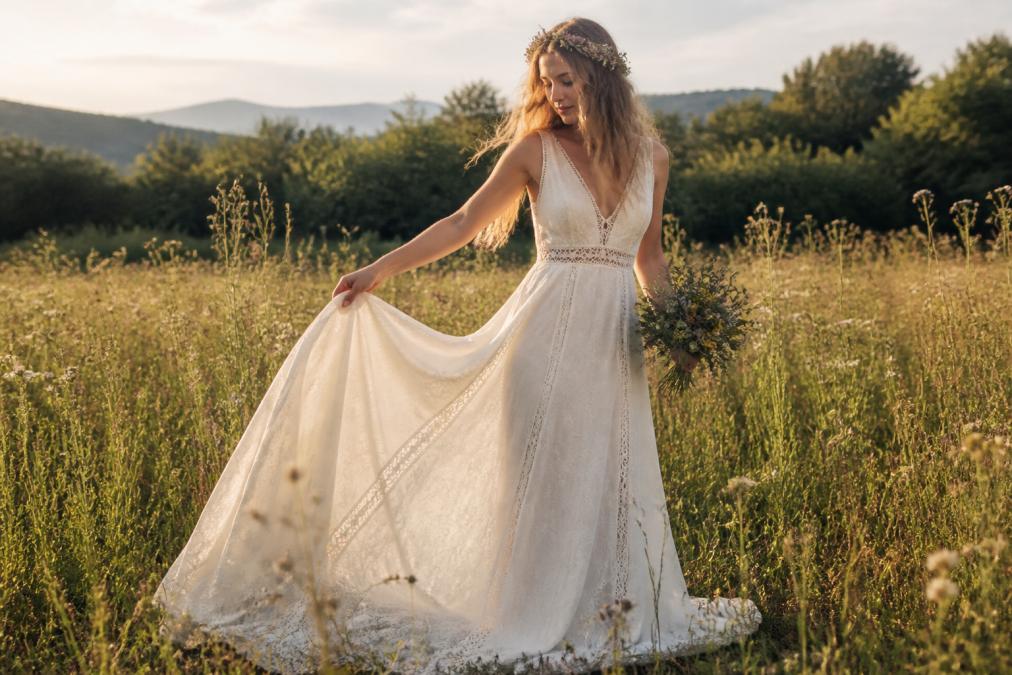
Breathable Wedding Dress Fabrics for Outdoor Comfort
The most breathable wedding dress fabrics are linen, cotton, and lightweight silk, because their fiber structure wicks moisture and allows airflow. For beach weddings and garden ceremonies, this matters more than any design detail. Heat and humidity expose every weakness in a synthetic gown.
Linen leads for airflow. Cotton is softer against sensitive skin.
- Linen: maximum airflow, natural texture, ideal for beach and garden venues
- Cotton: soft, hypoallergenic, great for long wear
- Silk: elegant soft drape, best for cooler or indoor settings
- Blends: combine structure with breathability when chosen carefully
Organic Cotton vs. Linen vs. Silk: Fiber Comparison
Each fiber solves a different problem, so the right choice depends on your venue, season, and skin. The table below is a starting point, but the mechanism behind each fiber is what actually determines how a boho wedding dress feels at hour six.
| Fiber | Breathability | Moisture Behavior | Best For | Care Level |
|---|---|---|---|---|
| Organic cotton | High | Absorbs and releases sweat slowly; stays soft when damp | Sensitive skin, long wear, humid receptions | Easy |
| Linen | Highest | Wicks fast and dries quickly; feels cool against skin | Beach, garden, summer, high humidity | Moderate |
| Silk | Moderate | Holds warmth and shows water spots; drapes fluidly | Evening, indoor, climate-controlled venues | Delicate |
| Cotton-linen blend | High | Balances airflow with softness; wrinkles less than pure linen | Versatile outdoor weddings | Easy |
How to Read a Fiber Label Before You Buy
Most bridal listings bury the fiber content in a spec tab, and the order of ingredients matters. Fibers are listed by weight, highest first, so "cotton, linen, polyester" is a cotton-dominant dress, while "polyester, cotton, linen" is a synthetic dress with natural-fiber marketing. If the natural fiber is third or lower, you are paying for the look, not the performance.
Skin Sensitivity and Allergy Considerations
This is the angle most bridal guides skip. Natural fibers are generally gentler on sensitive skin, and cotton and linen are considered hypoallergenic because they do not trap sweat against the body the way polyester does. Synthetic fabrics can hold heat and moisture, which irritates reactive skin over a long day and can trigger contact dermatitis in people with known sensitivities.
Sustainable Bridal Fashion Trends in 2026
Sustainable bridal fashion in 2026 favors natural, biodegradable fibers over synthetic blends, along with vintage-inspired and vintage-inspired silhouettes that brides rewear after the wedding. Eco-conscious shoppers increasingly ask where a fabric comes from and whether it will break down at end of life. Biodegradable natural fibers answer both questions.
When a listing shows fiber content, read it closely. A gown labeled "linen blend" can still be mostly polyester, so check the percentages before you buy.
Eco-Friendly Wedding Dress Care Tips for Longevity
Proper care keeps natural fabrics looking new and extends how often you can wear them. Hand-wash delicate pieces in cool water with a gentle detergent, or use a mesh bag on a delicate cycle. Air-dry flat to protect the shape. Store folded in breathable cotton, never sealed plastic, which traps moisture.
- Wash in cool water to prevent shrinkage and fading
- Skip harsh bleach and fabric softener
- Air-dry away from direct sun
- Store folded, not hung, to avoid stretching
- Spot-clean small marks right away
Matching Natural Fabrics to Your Wedding Venue
Venue and fabric should be chosen together, because climate and setting decide what stays comfortable. Most bridal guides stop at "linen for beach, silk for ballroom." A more useful approach is to match the fiber to the actual conditions, temperature, humidity, wind, and how long you will be outside, because that is what determines whether you are comfortable at hour eight.
Qidi wedding dress shoulder wedding →
Seasonal and Climate Performance Guide
Use this as a starting point, then adjust for your specific venue and month.
- Hot and humid (above 80°F, high humidity): Linen is the clear winner. It wicks moisture fast and dries quickly, so it stays cool even when you are dancing. Lightweight cotton is a close second. Avoid silk and any heavy weave, they hold warmth and show sweat.
- Hot and dry (above 85°F, low humidity): Linen and cotton both perform well, but linen's stiffness can feel scratchy in dry air. A cotton-linen blend softens the hand-feel without losing airflow. Silk is workable in the evening once temperatures drop.
- Warm and breezy (beach, waterfront): Linen and light cotton handle wind and salt air best. Skip anything with a heavy train or unlined silk, which catches wind and shows water spots.
- Mild and temperate (65-75°F): Almost any natural fiber works. This is the range where silk becomes a real option for outdoor ceremonies, especially in the evening.
- Cool and indoor (below 65°F, climate-controlled): Silk and heavier cotton weaves shine here. Linen can feel cool against skin in air conditioning, so a lined linen or a cotton-silk blend is more comfortable.
- Mountain or high-altitude: Temperatures swing hard between afternoon and evening. A cotton-linen blend with a light wrap or shawl gives you the most flexibility, because linen handles the warm afternoon and the wrap covers the cool evening.
Venue-by-Venue Notes
A beach ceremony calls for airy linen and light cotton that handle wind and salt air. A garden wedding suits cotton-linen blends and soft drapes. An indoor or evening event opens the door to silk and heavier weaves.
A Quick Decision Shortcut
If you are choosing between two dresses and cannot decide, ask one question: will I be outside for more than an hour in temperatures above 75°F? If yes, choose the more breathable fiber every time. If no, you have room to prioritize drape, sheen, and detail over airflow.
Allergy and Skin Sensitivity Considerations
Natural fibers are generally gentler on sensitive skin, and cotton and linen are considered hypoallergenic. Synthetic fabrics can trap sweat and heat, which irritates reactive skin over a long day. If you have known sensitivities, look for cotton-dominant or linen garments with a soft hand-feel and minimal chemical finishing.
Conclusion
The real challenge with a bohemian wedding is finding a dress that looks ethereal and still feels good after eight hours. Natural fibers solve that problem, and JazzySuSu curates vintage-inspired pieces built for exactly this. Our cotton and cotton-linen dresses offer breathable comfort, timeless style, and free shipping on orders over $100. Shop now and find a dress you will want to wear again and again.
Frequently Asked Questions
What are the best natural fabrics for a bohemian wedding dress?
Linen, organic cotton, and silk are the top choices for a boho wedding dress. Linen offers a relaxed, textured look with excellent breathability. Organic cotton provides softness and hypoallergenic properties, ideal for sensitive skin. Silk adds a luxurious drape and natural thermal regulation. Blends like linen-cotton combine durability with comfort, making them perfect for outdoor ceremonies and dancing.
How do natural fabrics improve comfort for outdoor weddings?
Natural fibers like linen and cotton wick moisture away from the skin and allow air to circulate, keeping you cool during warm-weather ceremonies. Unlike synthetic fabrics that trap heat, breathable wedding dress fabrics regulate your body temperature. This means less sweating and more comfort while you celebrate, especially for beach or garden venues where direct sun and humidity are factors.
Are natural fabric wedding dresses more sustainable?
Yes, natural fibers such as organic cotton, linen, and silk are biodegradable and often produced with fewer chemicals than synthetics. They support sustainable bridal fashion trends by reducing microplastic shedding and lasting longer with proper care. Choosing natural fabrics helps lower your wedding's environmental impact and aligns with eco-conscious values, though always check sourcing and certifications.
How do I care for a natural fiber wedding dress after the ceremony?
Follow eco-friendly wedding dress care tips: spot-clean promptly with a gentle detergent, avoid harsh solvents, and air-dry away from direct sunlight. Store your dress in a breathable cotton garment bag, not plastic, to prevent yellowing. For deep cleaning, seek a specialist experienced with natural fibers. Proper care preserves the fabric's hand-feel and extends its life for years or future wear.
What body types suit boho wedding dresses?
Bohemian wedding dresses flatter all body types because of their flowing silhouettes and relaxed fits. Empire waists and A-line cuts work well for apple and pear shapes, while slip styles and off-the-shoulder designs highlight shoulders and collarbones. The key is choosing a natural fabric with soft drape that moves with you, not against you. Try multiple styles to find your most comfortable fit.